Talking Art – Dada
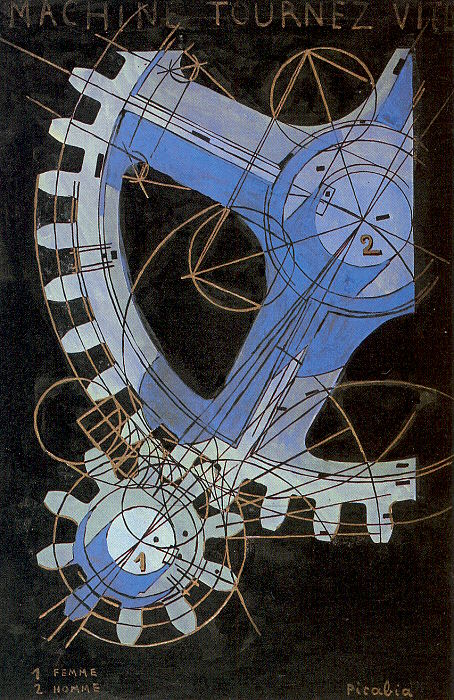
Dada was an international art movement founded as the Cabaret Voltaire in Zurich with nightly performances and manifestos by the poet Hugo Ball and the performance artist Emmy Hemmings. It developed in the context of the Great War and Futurism, and later quickly spread to Berlin, Paris, New York City and a variety of artistic centres in Europe and Asia. Participants framed their activity as a protest against war, nationalism, and cultural conformity, adopting strategies of nonsense, chance, and ridicule to negate prevailing aesthetic values.
Dadaists worked across media, including sound poetry, simultaneous recitation, collage, photomontage and the use of found objects and assemblage. In New York and Paris Marcel Duchamp’s readymades became emblematic of Dada’s anti-art stance.
The origin of the name Dada is shrouded in legend. One widely repeated story holds that Richard Huelsenbeck jabbed a paper knife at random into a dictionary, landing on the French word dada (“hobby horse”); or maybe from the arrival in Switzerland by the Romanians Tristan Tzara and Marcel Janco; dada meaning ‘nothing’ in Romanian. Other accounts emphasize its infantile sound or its multilingual neutrality, aligning with the movement’s internationalism.
The related label “anti-art”—often associated with Duchamp and the readymade—denotes practices that challenge accepted definitions of art. Although broadly based it was short-lived as a movement and by 1924 was seen as a precursor to Surrealism.
Contact Robert Sedgley on talking.art@u3ajavea.com