The Discussion group at the last meeting before summer break on 3rd July navigated the complex layers of the Spanish state apparatus. At the beginning, we needed time to move beyond daily media noise to analyse the structural mechanics of how corruption is perceived versus how it is legally executed. The core takeaways and international insights unfolded across four major themes:
1. The Baseline Paradox: Public Perception vs. Structural Reality was about the cultural scepticism among Spanish and foreign residents. Members highlighted that the widespread popular assumption in Spain is that all politicians are corrupt.
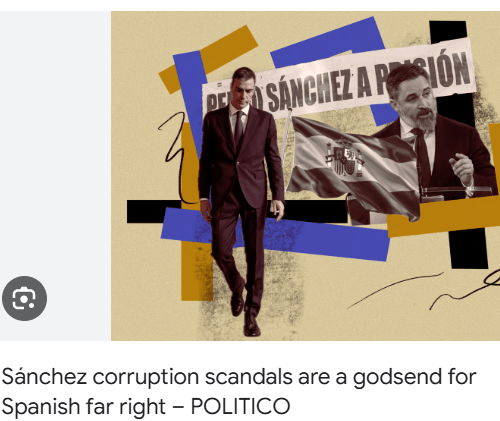
On the surface, the simultaneous investigations into Prime Minister Pedro Sánchez’s wife (Begoña Gómez) and brother (David Sánchez) seem to validate this baseline cynicism. However, a closer look at the mechanics reveals that this assumption is fundamentally flawed.
In Spain’s legal framework, the entry threshold to launch a corruption probe is very low. It has a unique feature: the constitutional right to “Popular Accusation” (acusación popular). Any citizen, political party, or private organisation can launch a criminal lawsuit and drive an investigation forward, even if they are not a direct victim and have suffered no harm. A judge (often from a lower territorial court) has to open a formal case without providing hard evidence of a crime—they merely need to assert that an individual “could have committed” corruption. Judges in Spain have almost unlimited power to order investigations, raids, and to continue investigations for a very long time, especially if the accusing party push forward and introduces new claims
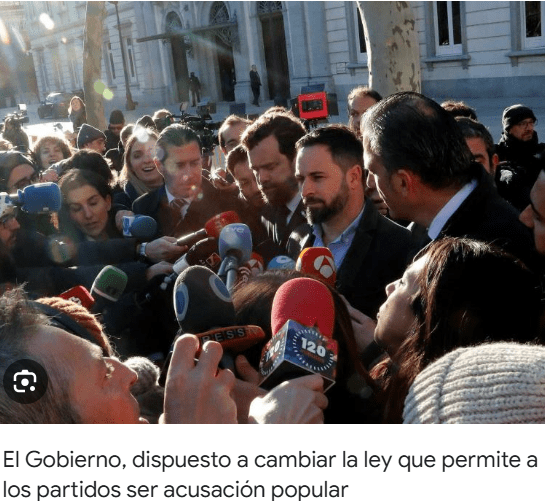
(The Government has been prepared since 2019 to change the law that allows political parties to act as private prosecutors, but the legislative process has been dragged out for years)
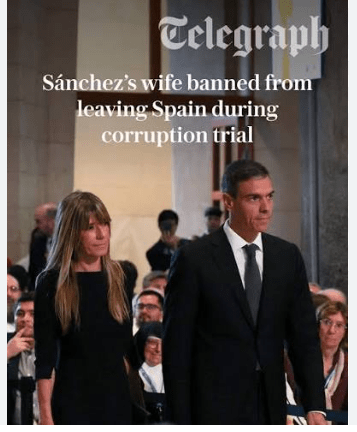
2. Deep Dive: The Begoña Gómez Case Study The group selected the case against Begoña Gómez as the primary focus, treating it as a premier example. It was noted that the inquiry has dragged on for over two years despite a total absence of evidence in emails, money tracks or multiple witnesses called by private prosecution. Because political influence cases are tried in the court, public opinion is formed long before a courtroom trial, and the reputational damage to the individual and the PSOE is achieved instantly. The group analysed the recent controversial decision by the lower-court judge to seize Gómez’s passport. This move was initiated by Has Oir, Vox and PP, who maximise media saturation in the powerful and dominant right-wing media ecosystem.
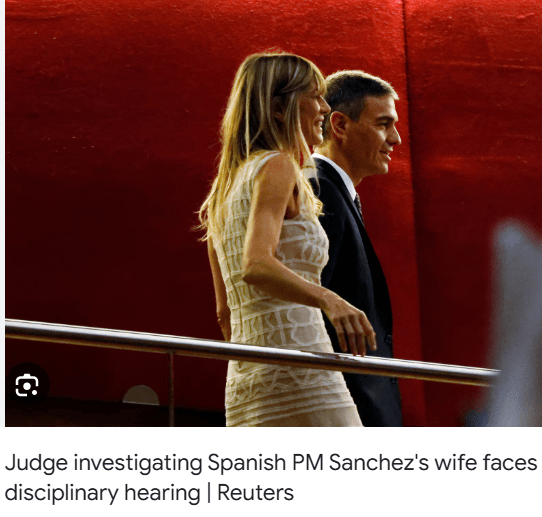
3. The Institutional Technology & The Asymmetry of Power: The partisan mechanics driving legal battles are that in the majority of the highly publicised cases are initiated by right-wing proxy collectives like Manos Limpias and Haz Oir, amplified by the Partido Popular (PP) and Vox. These legal proceedings represent a direct continuation of a fierce lawfare and political war. Because conservative forces maintain a historically deeper alignment and control over specific sectors of both the media and the lower judiciary, they developed a very efficient technology to systematically discredit centre-left governance.
4. International Comparisons: France, the UK, and the USA. To gain a broader perspective, the group contrasted Spain’s current climate against that of other countries, revealing institutional differences:
France often presents the exact opposite dynamic, where mainstream media and segments of the judicial landscape are dominated or influenced by left-wing political figures (the case of sentencing Marine Le Pen)
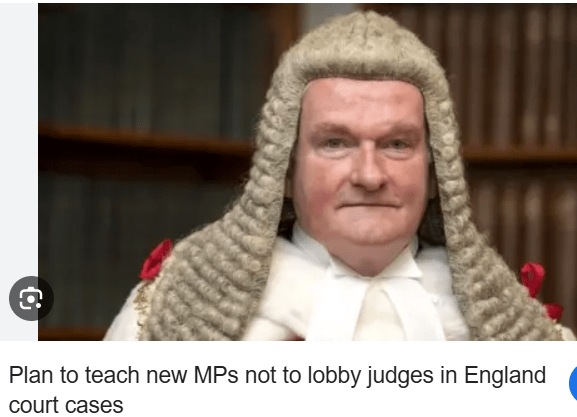
Meanwhile, the UK judicial system appears structurally more balanced and less intensely exposed to partisan capture; members could not recall a historical precedent where a British Prime Minister’s immediate family was aggressively targeted and accused of systemic corruption in this manner.
Finally, the group pointed to the US and the intense ethical debates surrounding President Donald Trump, whose family business declared jaw-dropping earnings of roughly $2.2 billion for the 2025 fiscal year. While demands for corruption inquiries are rampant in the US context, the group agreed that the sheer scale of American political-corporate overlap represents a completely distinct institutional battlefield.
The Ultimate Conclusion: while public cynicism assumes top-down corruption, the reality of Pedro Sanchez’s family (Begoña Gómez’s, David Sanchez) inquiry points to a structural imbalance. It doesn’t mean that nobody in the PSOE, the political and governing system, is free of corruption, but the total volume and size of corruption is significantly dominated by the PP. By allowing lower-court judges to run open-ended investigations based on loose allegations, Spain’s legal framework allows political opposition forces to weaponise the apparatus of the law. The true damage is executed entirely by media amplification, meaning the political objective is fully achieved long before any formal court determines legal guilt or innocence.