We were certainly blessed with great weather for our 11-day tour up to France, but rather too hot at times! I would like to especially thank Ian Cummings for writing a daily report of the trip on the Jávea U3A Facebook page, with many of the fantastic photographs which he took. I have taken the liberty, with Ian’s permission, to copy his report verbatim, with a few addtional notes and pictures of mine along the way!
Wednesday 20th May
The first stop on our Spanish Culture and Cuisine tour was El Machistre, just north of Valencia. Here we had a very interesting talk on the cultivation of ‘Tiger Nuts’ and the production of Horchata. We also had a tasting of Horchata and fartons.
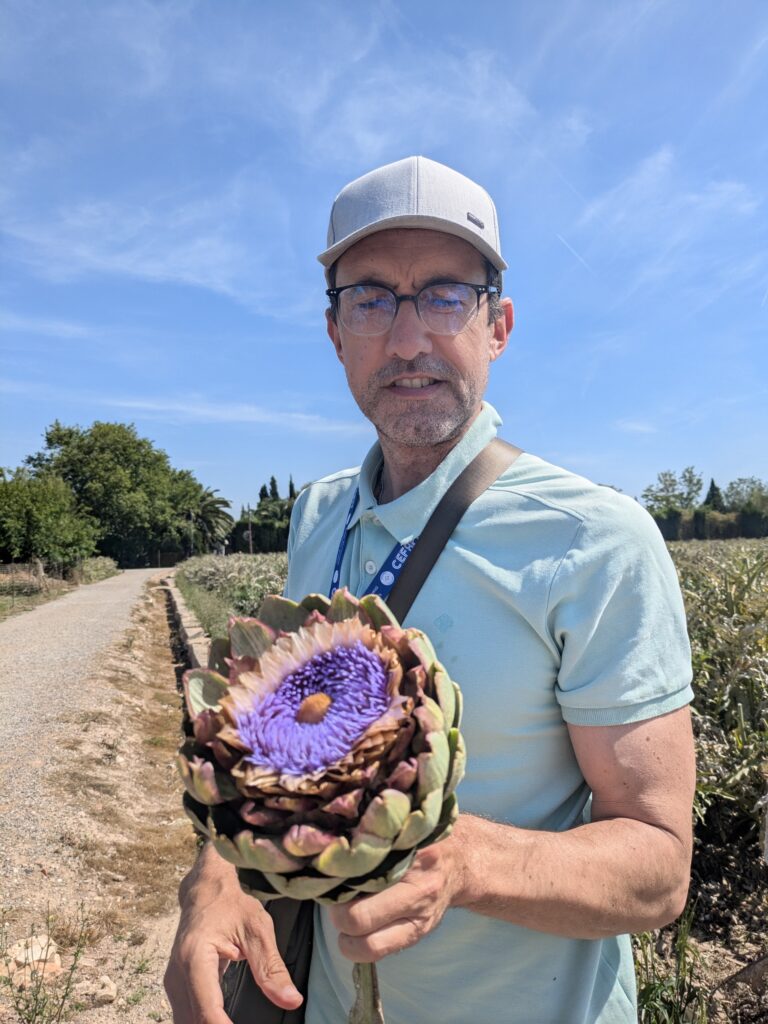
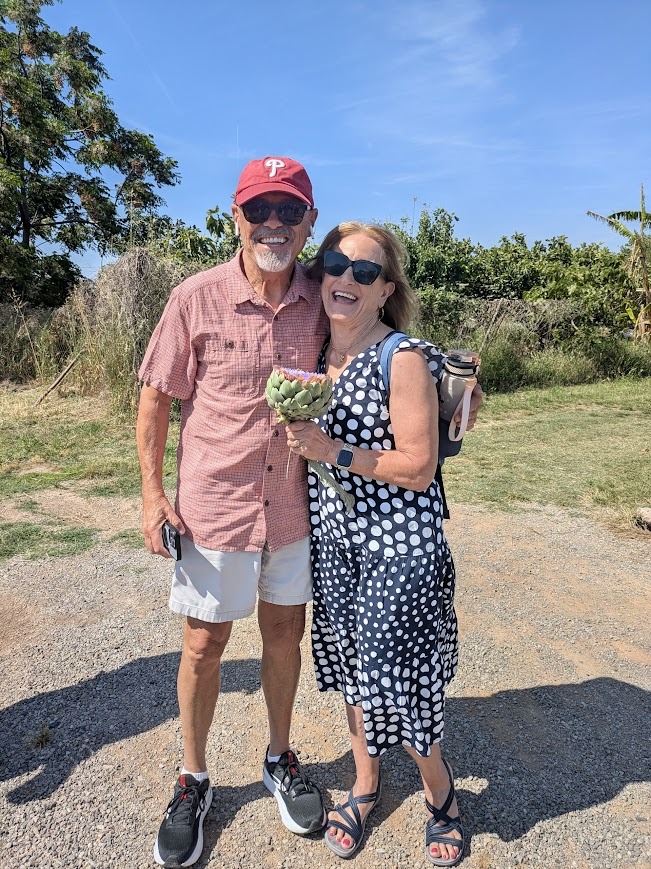
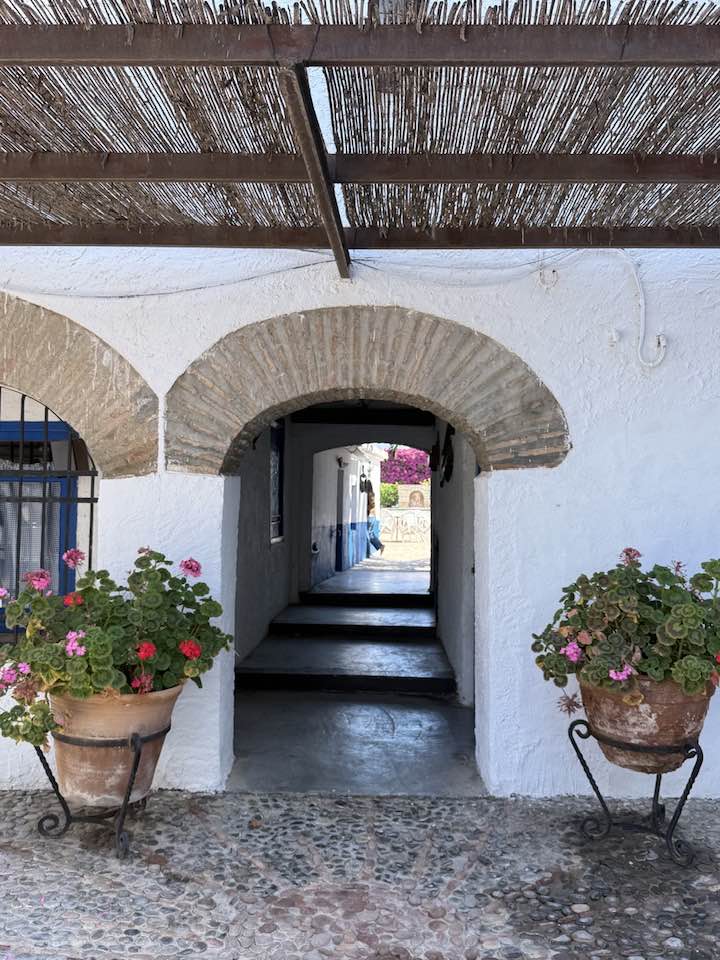
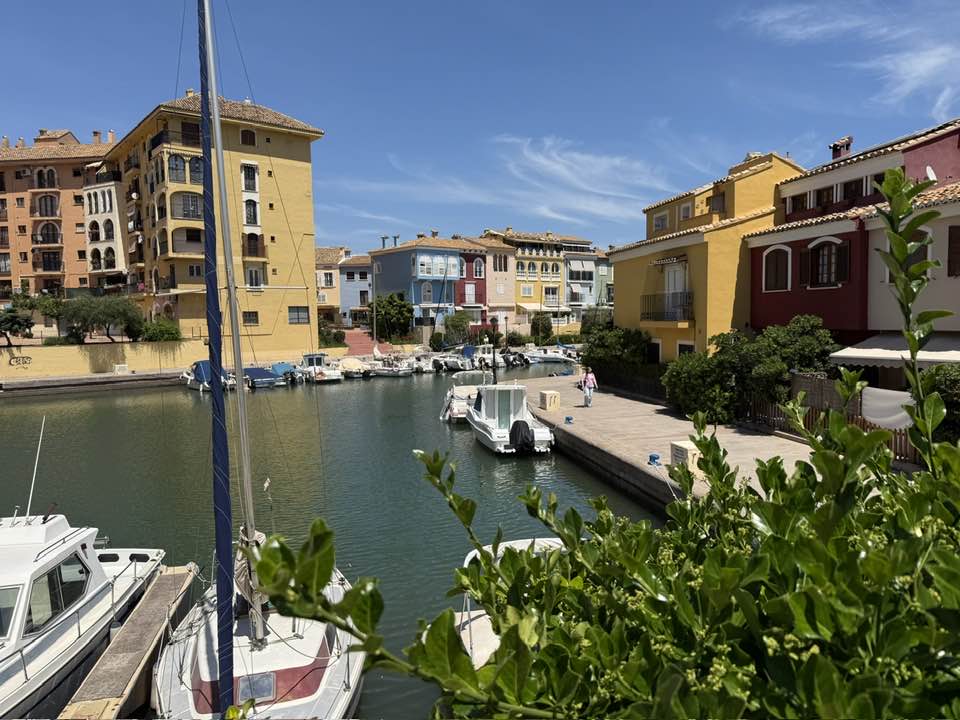
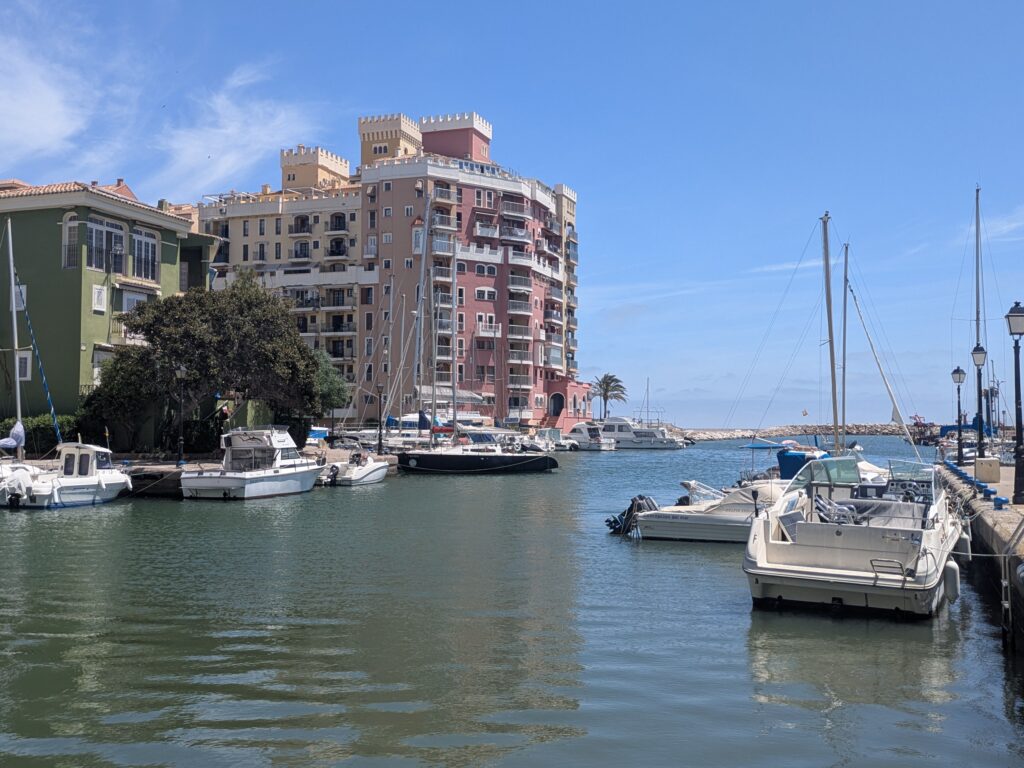
Lunch followed at Port Saplaya in Alboraya (known as Valencia’s “Little Venice”). After that we drove on to stay in Reus.
Thursday 21st May: Reus
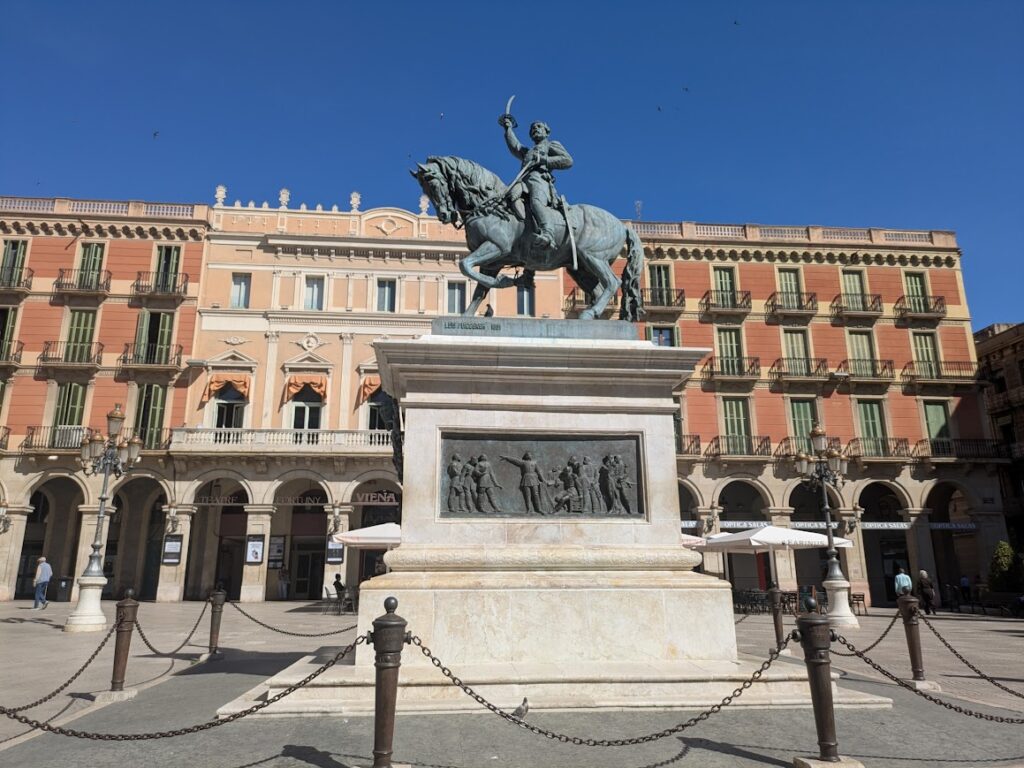
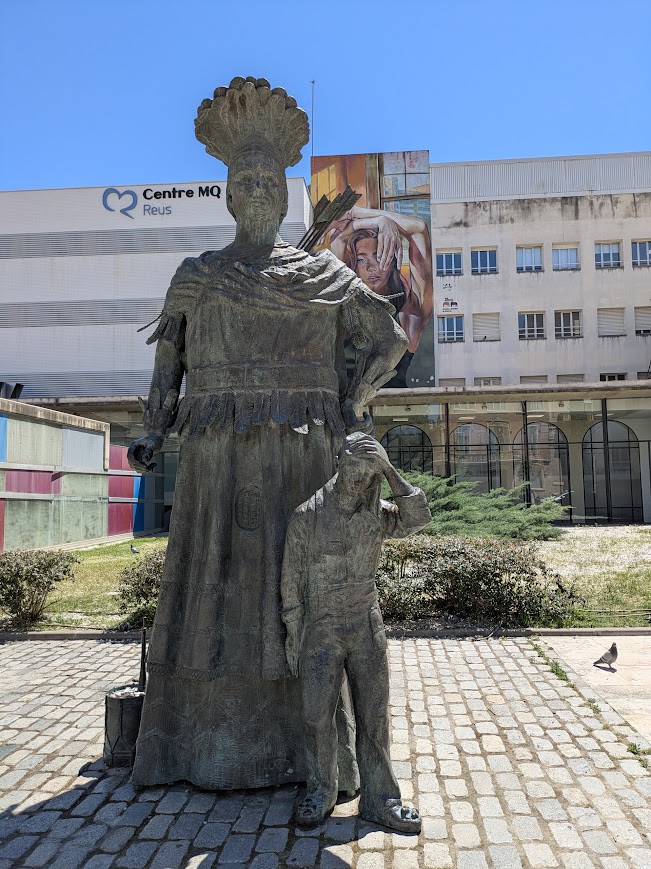
Today we had a free day to explore Reus. Our first visit was to the Gaudi Museum which was very interesting. Lots of excellent explanations of the engineering that Gaudi used in his buildings, and in particular the Sagrada Familiar in Barcelona.
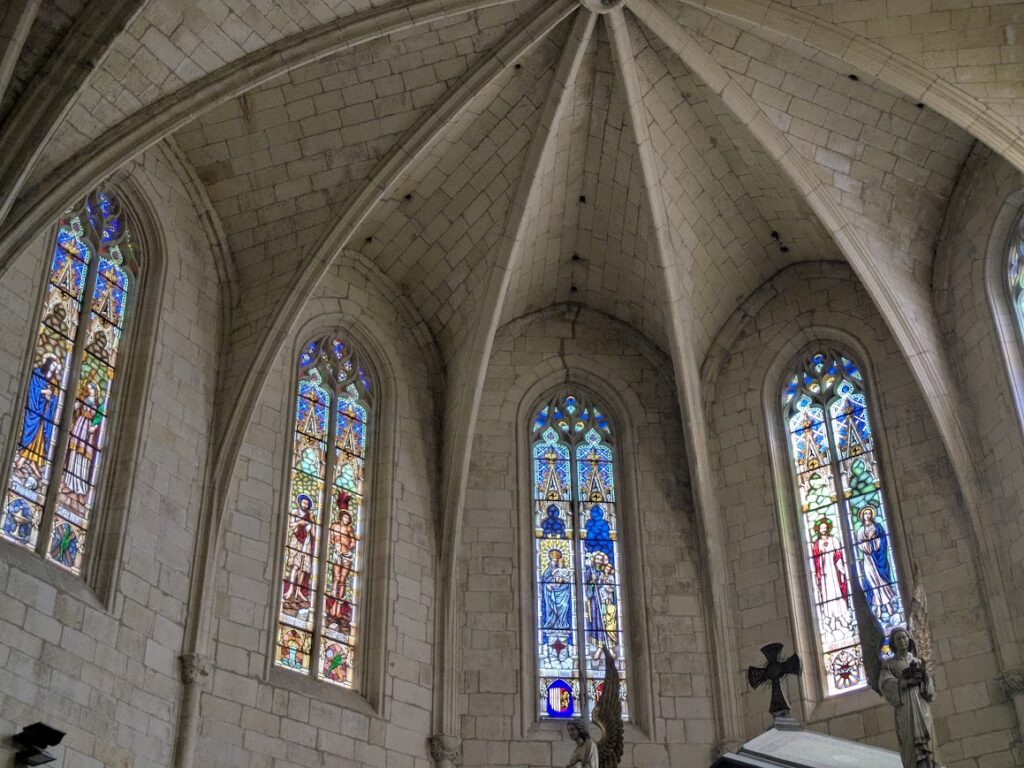
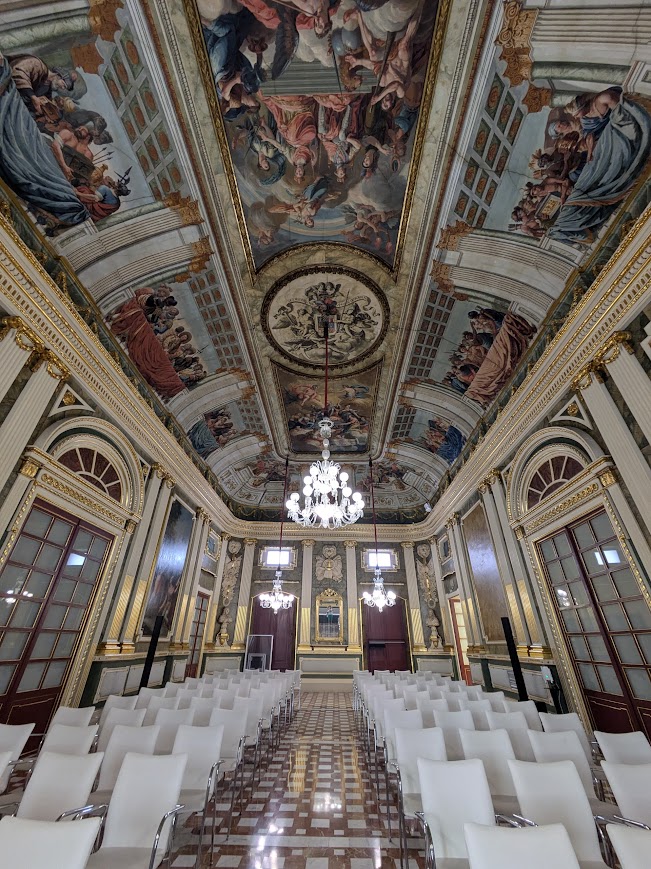
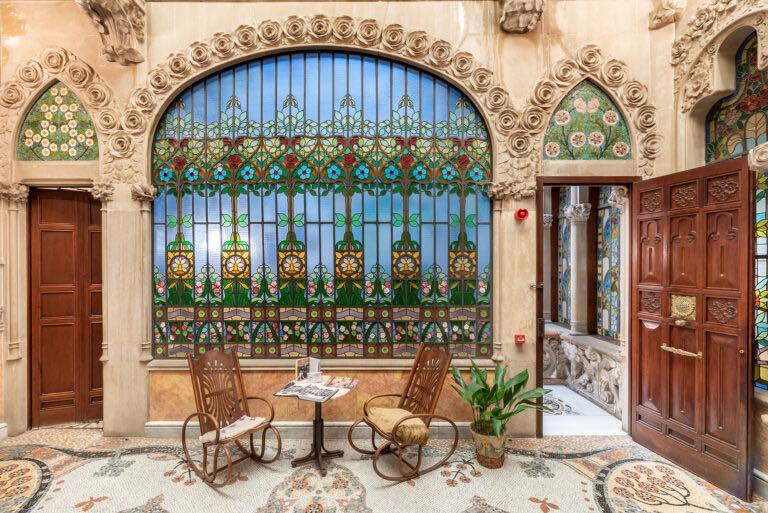
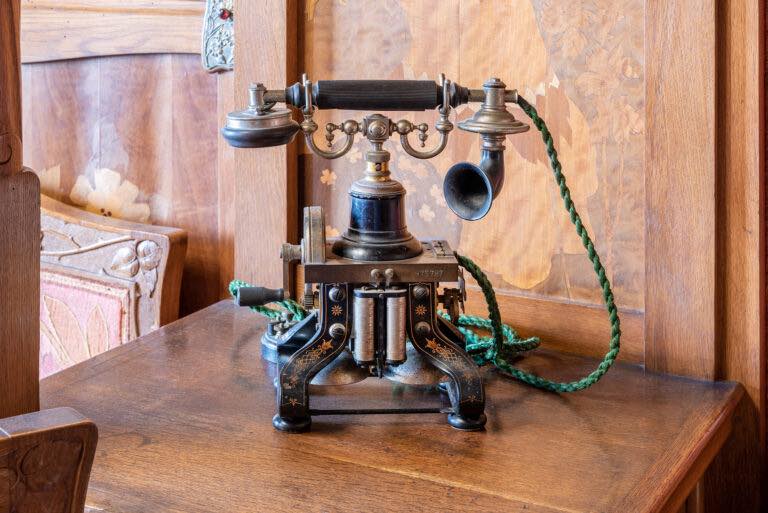
After that we followed the Modernist Buildings walking tour and saw some very interesting buildings. After lunch and a rest for tired feet we visited the Casa Navàs, a house built by two very wealthy fabric merchants. The house has been kept almost as it was, although some Civil War bomb damage needed restoration, and the tower is currently being restored. Very limited photography. The telephone in one of the pictures is the 98th phone sold in Spain. The budget for the building of this house was unlimited….the equivalent today of €600,000 was spent on just some of the stained glass.
Friday 22nd May: Caves Byrrh
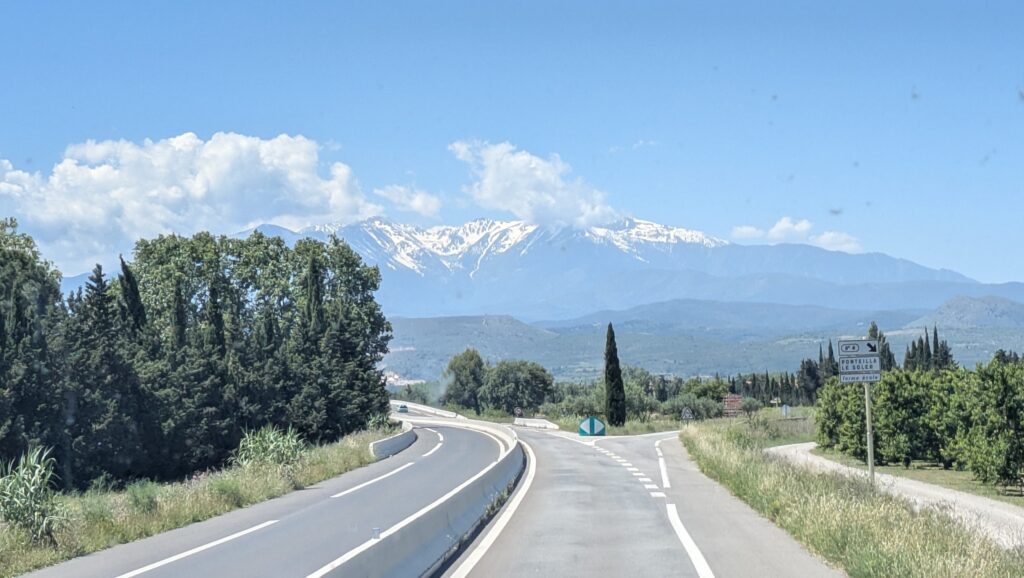
Today we travelled from Reus, in Spain, to Beziers, in France, with some lovely vistas of the snow-capped mountains enroute.
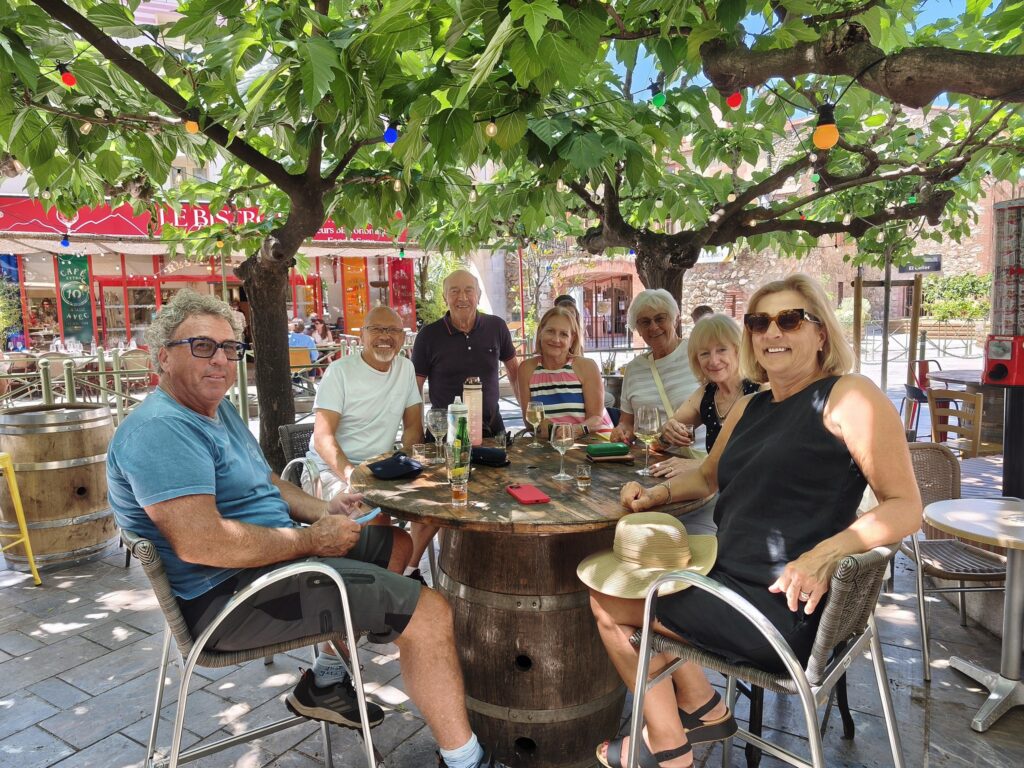
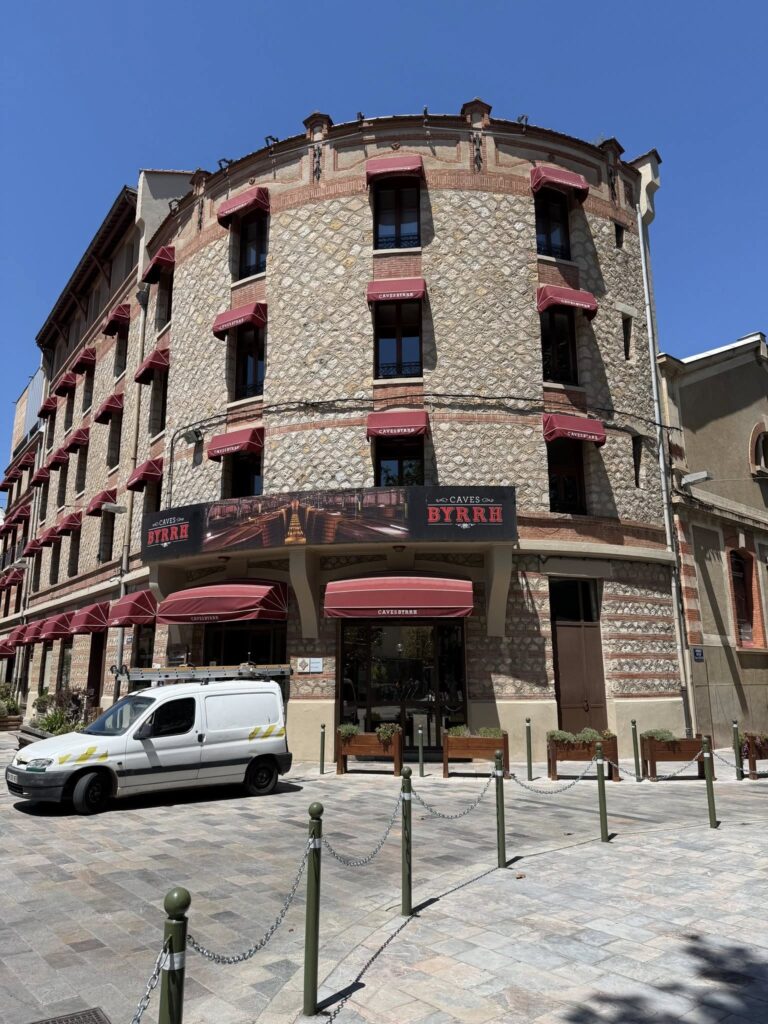
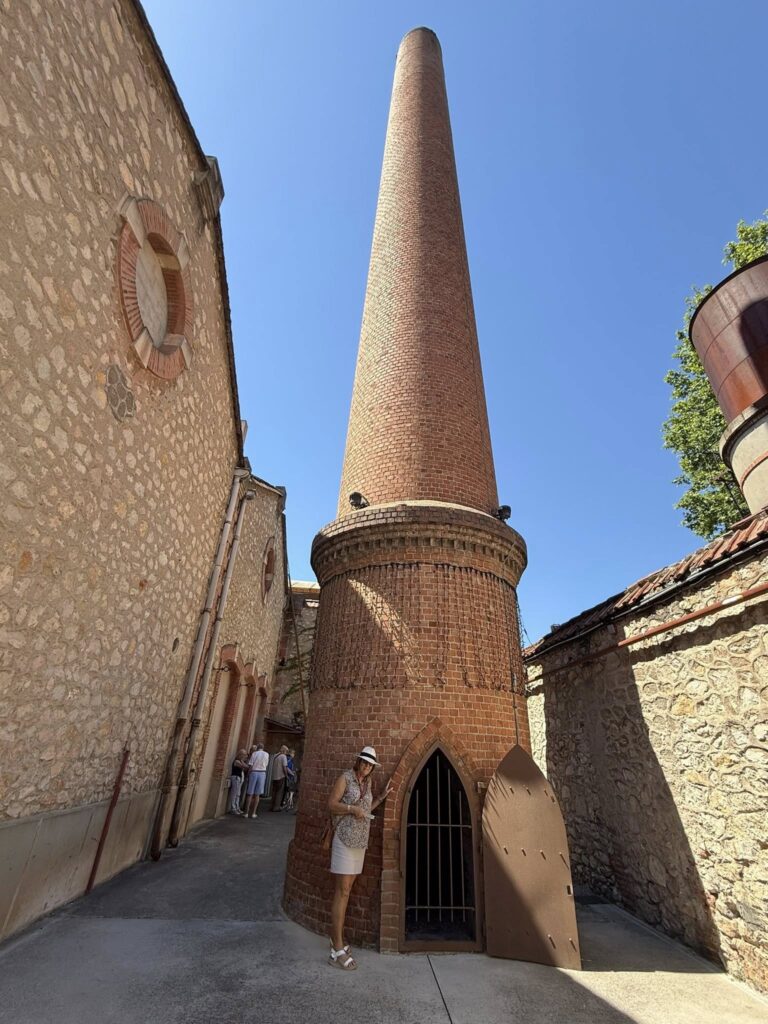
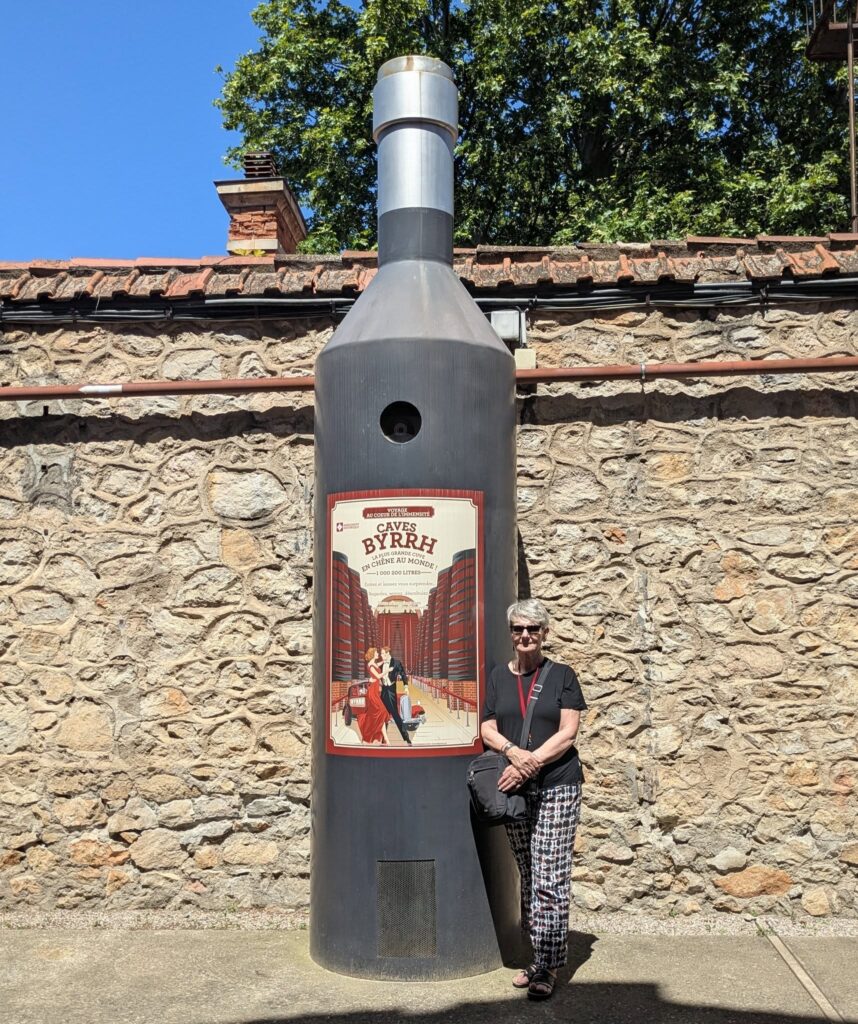
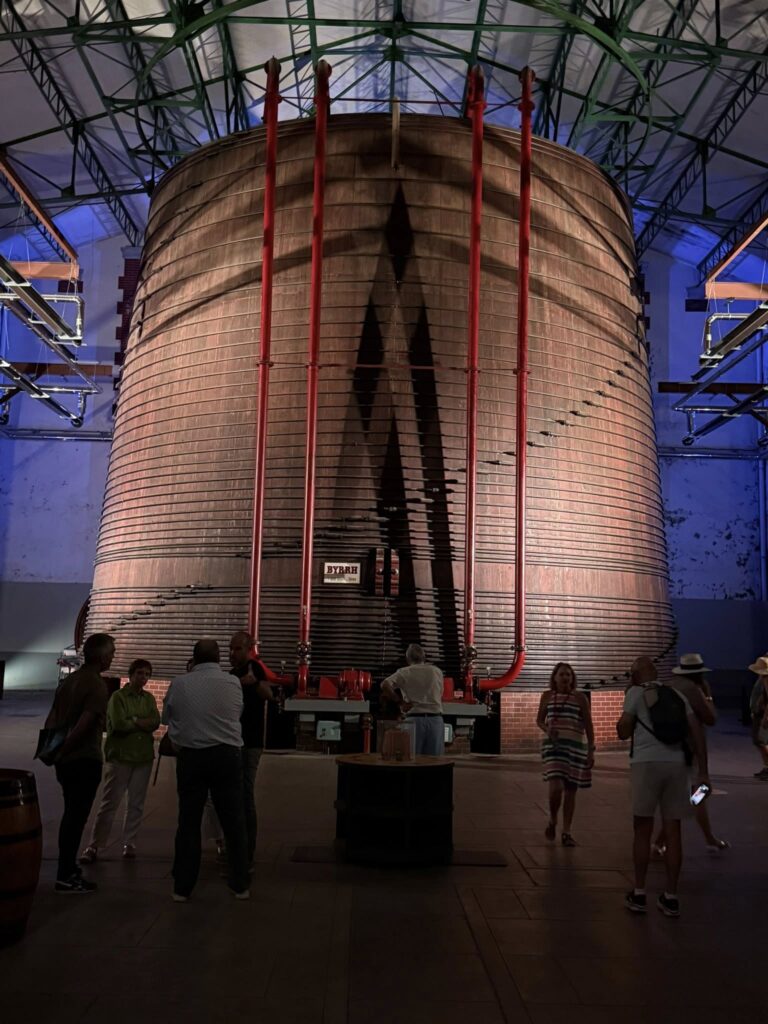
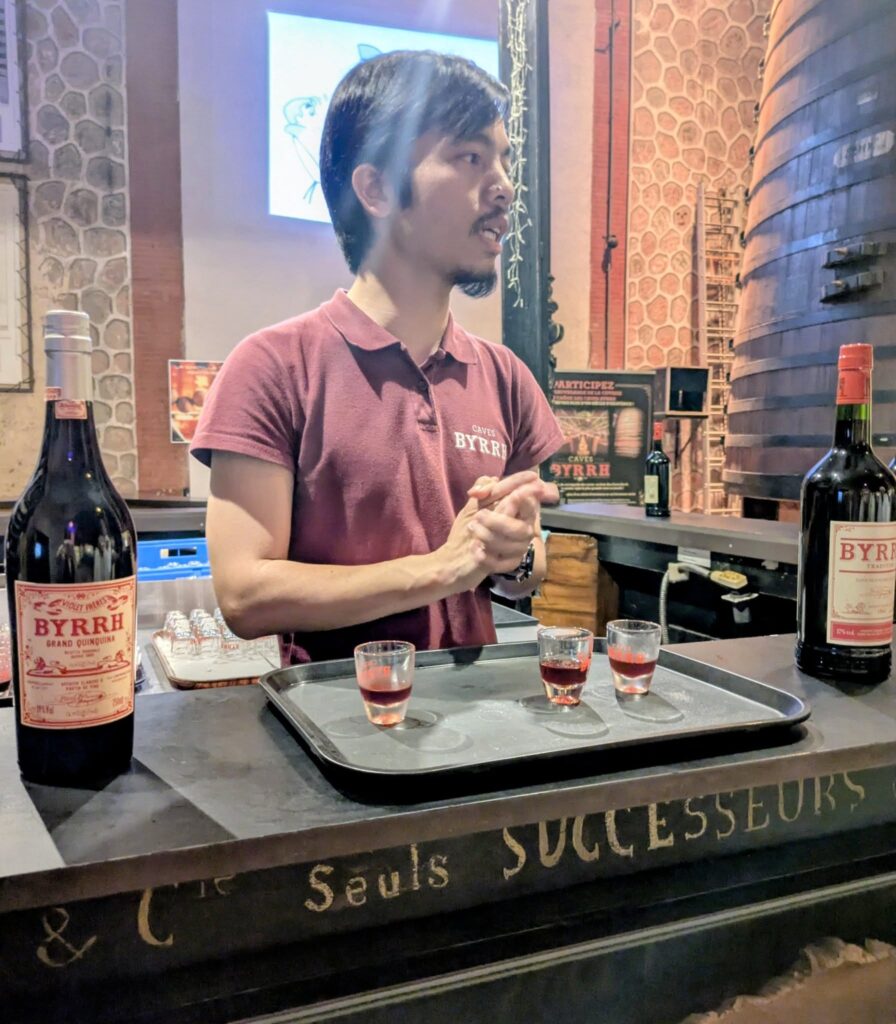
We stopped for lunch in Thuir, and that was followed by a visit to the Byrrh “facility”. Byrrh is an “hygienic” aperitif invented in the 19th century which, at its peak sold 35 million bottles per year. It was invented and produced by a family until relatively recently, when it was acquired by Pernod-Ricard. The family looked after its workers, providing healthcare, paid holidays and pensions long before they became normal in France. The drink is made in huge barrels, the very largest holding just over 1 million litres!
Saturday 23rd May
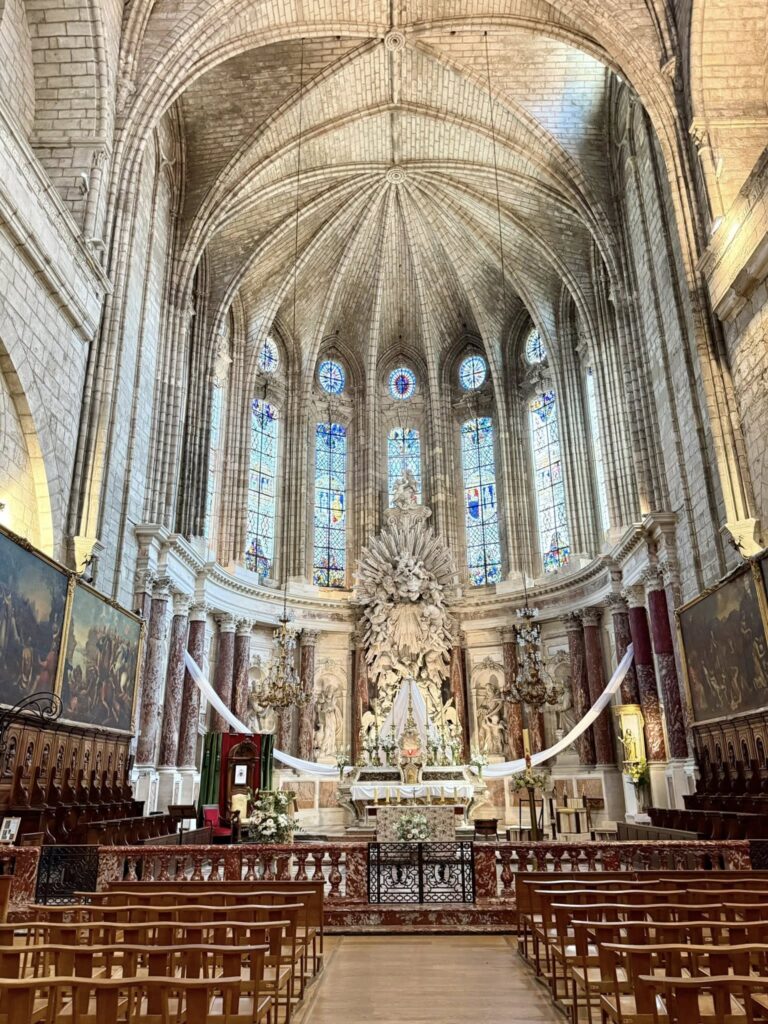
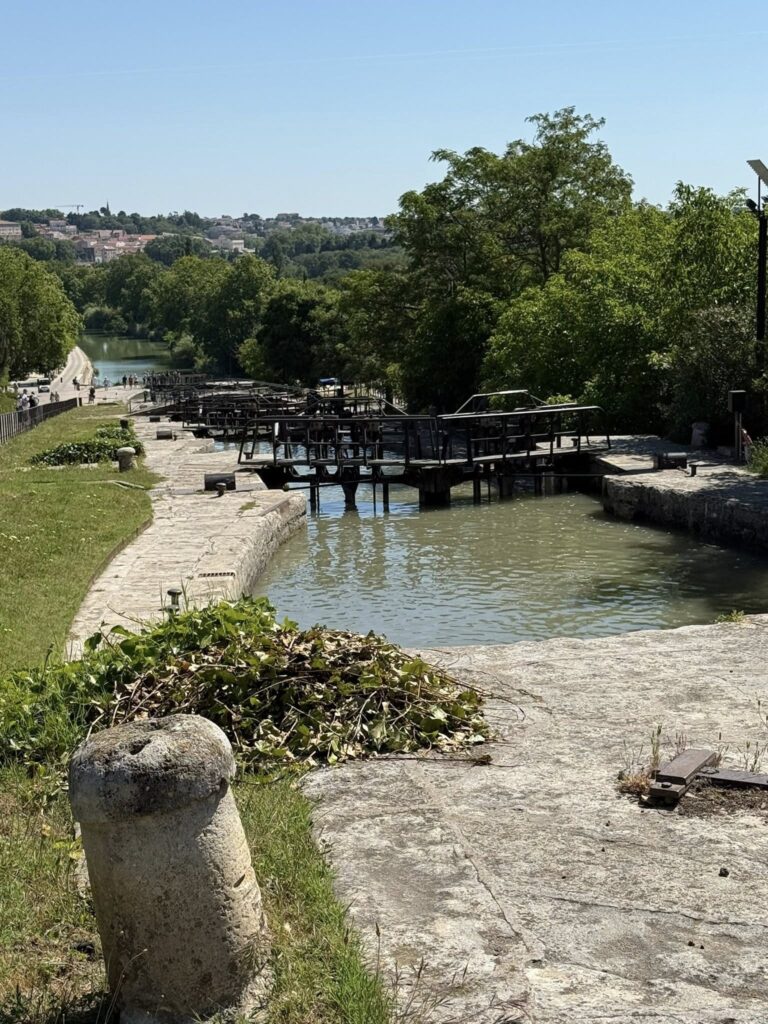
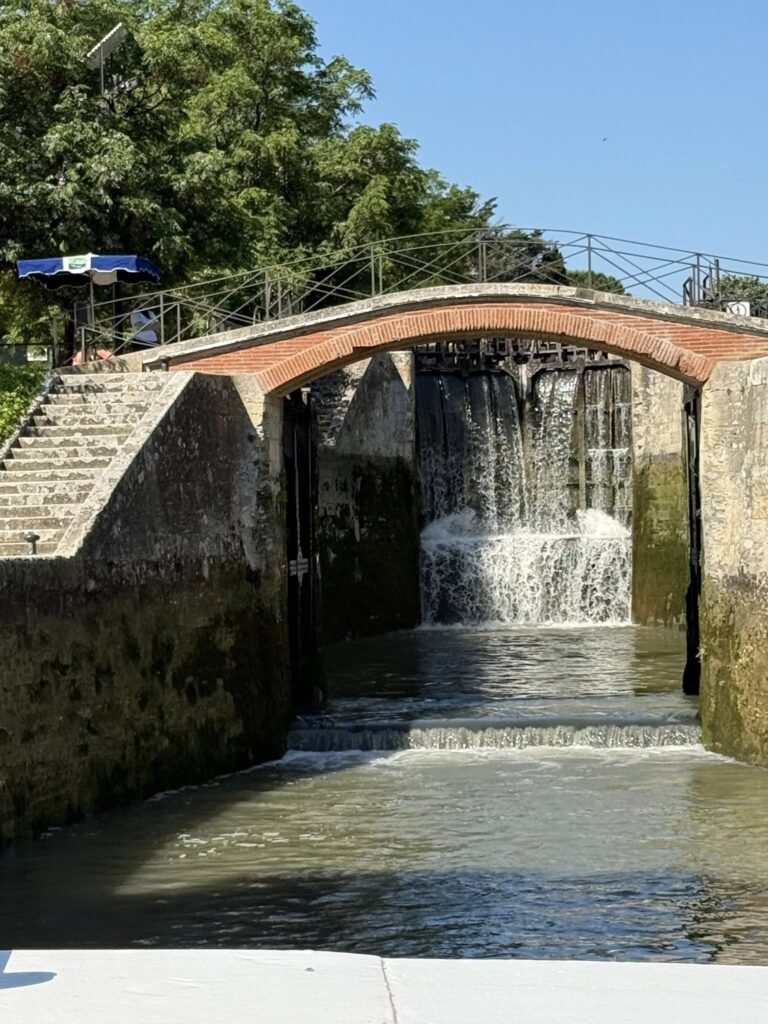
Today we had a free day to explore Béziers. We took a lovely walk past the Cathedral and then a clever walkway that zig-zagged down to the river. We crossed the pedestrian bridge and then followed the river to where it meets the Canal du Midi. Then we walked up to the Fonseranes 9 locks that were completed in 1681. These locks take the canal up and enable it to connect the Mediterranean to the Atlantic. After a very necessary drink stop we took the Petit Train back to the old town. After lunch we visited the market and then went into the Cathedral and the Cloisters.
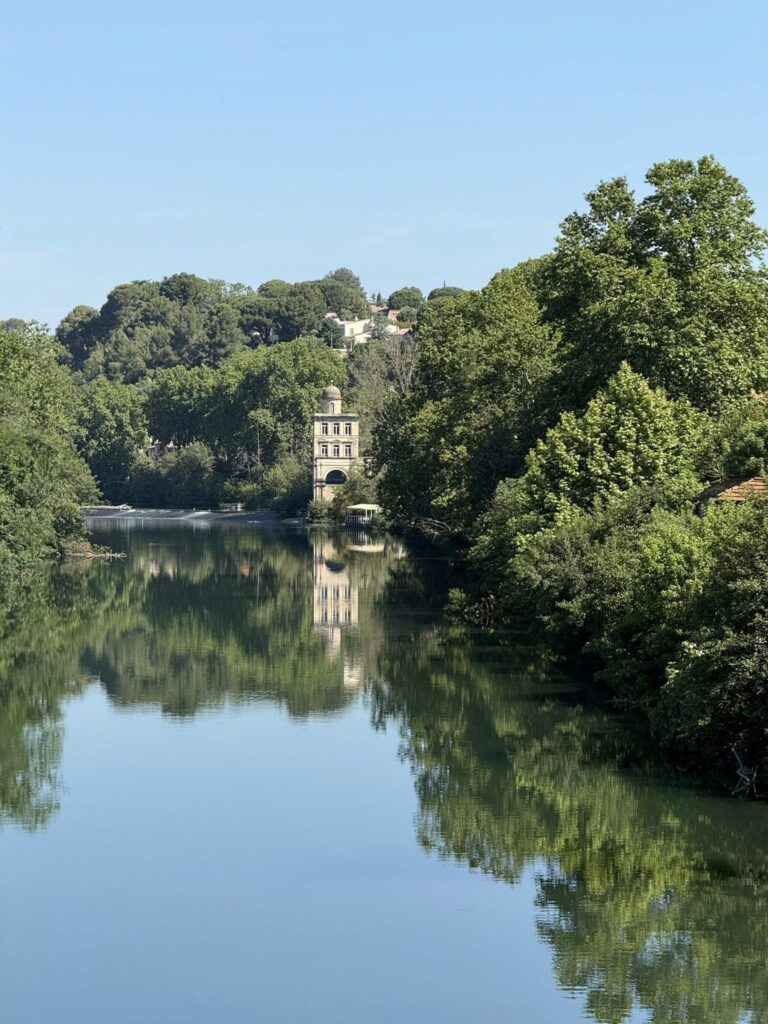
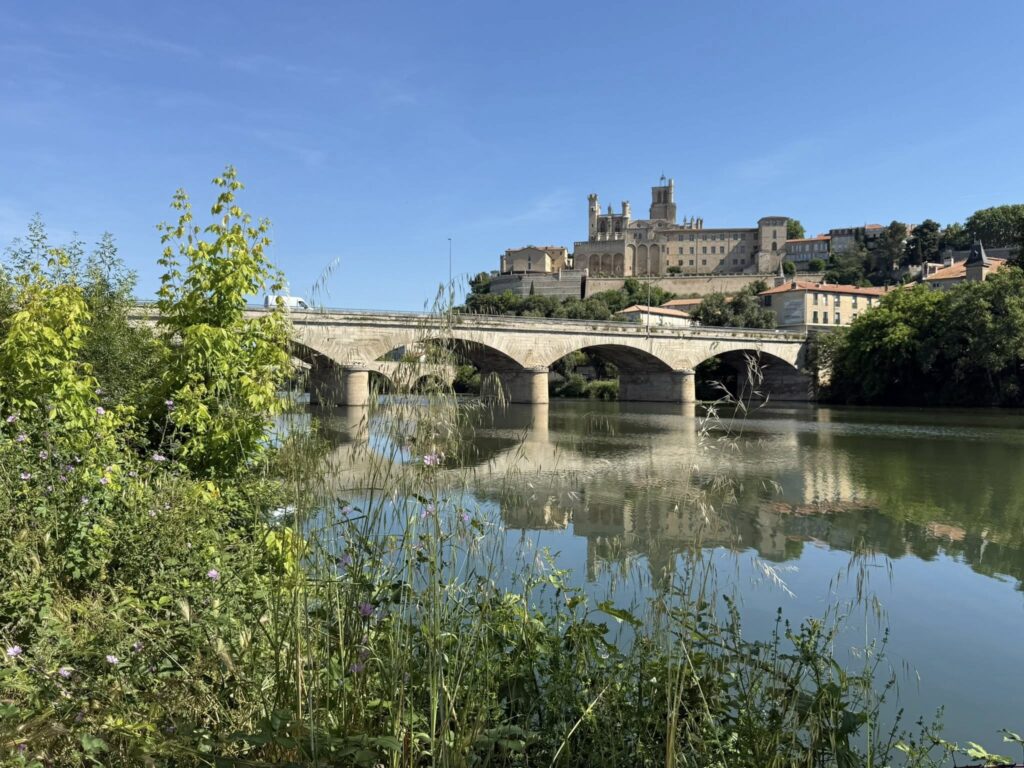
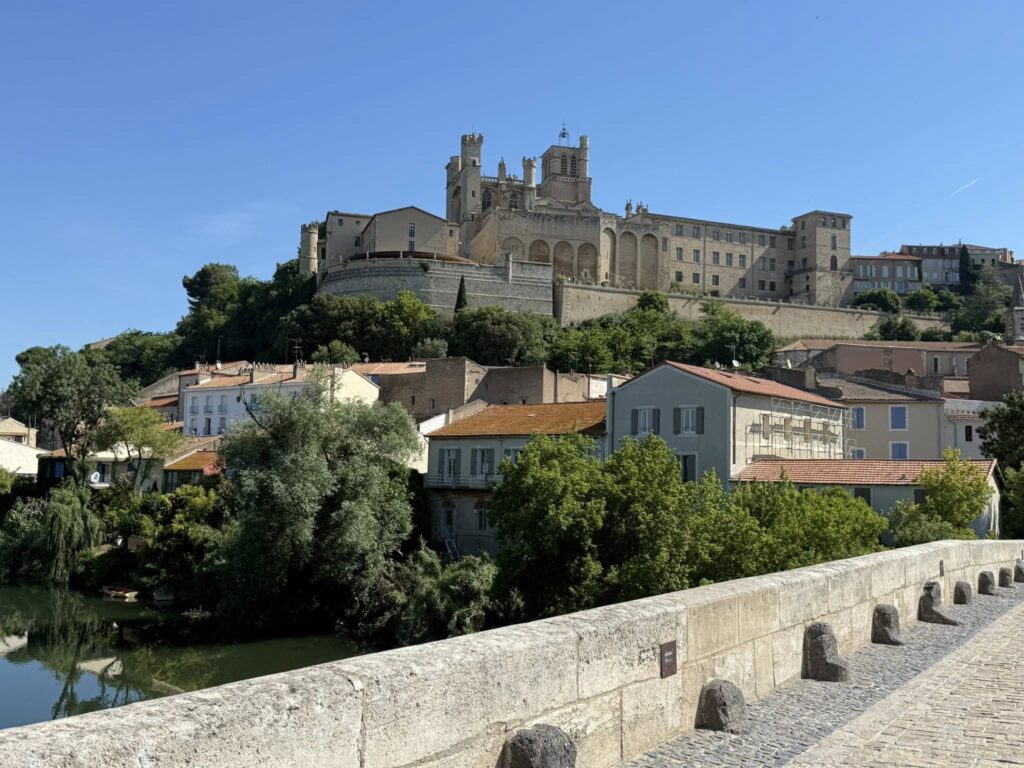
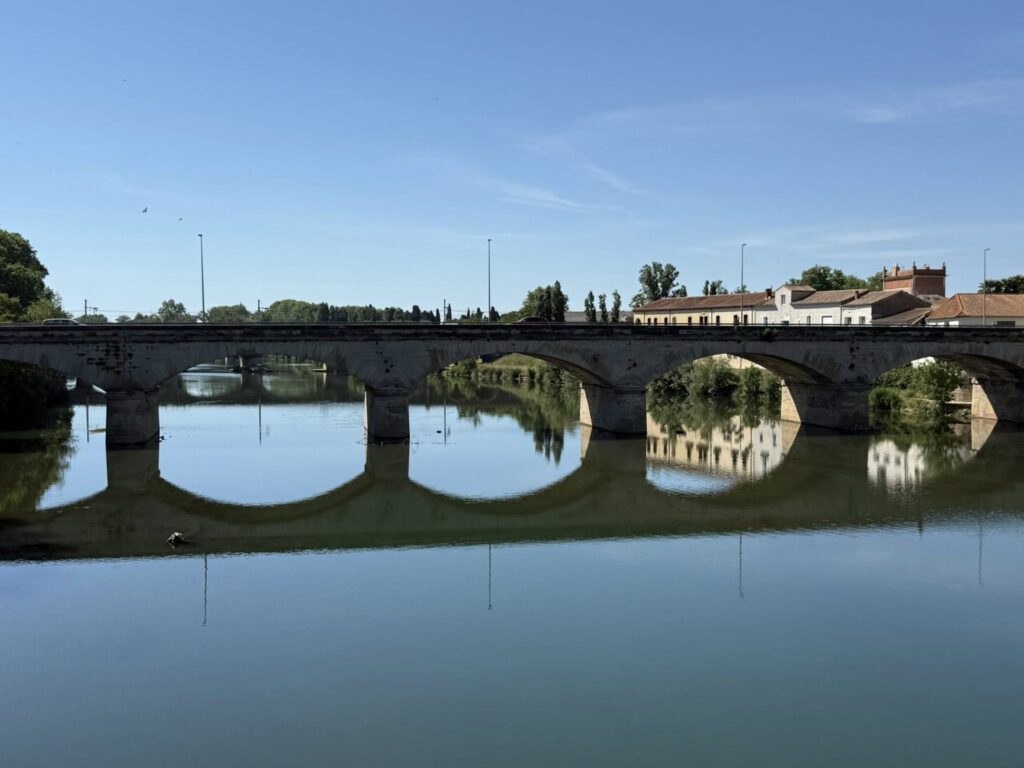
Our hotel for the 2 nights was located in the historic centre of Béziers, just around the corner from the Place Jean Jaurès, a recently renovated square with its water mirror and musical fountain.
Sunday 24th May: Canal du Midi, Béziers
After checking out of our hotel in Béziers we headed down to the Quay to board our boat for a trip on the Canal du Midi. On the way we crossed the river Orb via an aquaduct. Then we went up through the 9 locks, although only 6 are now used. We cruised along the canal for about an hour….it was very hot.
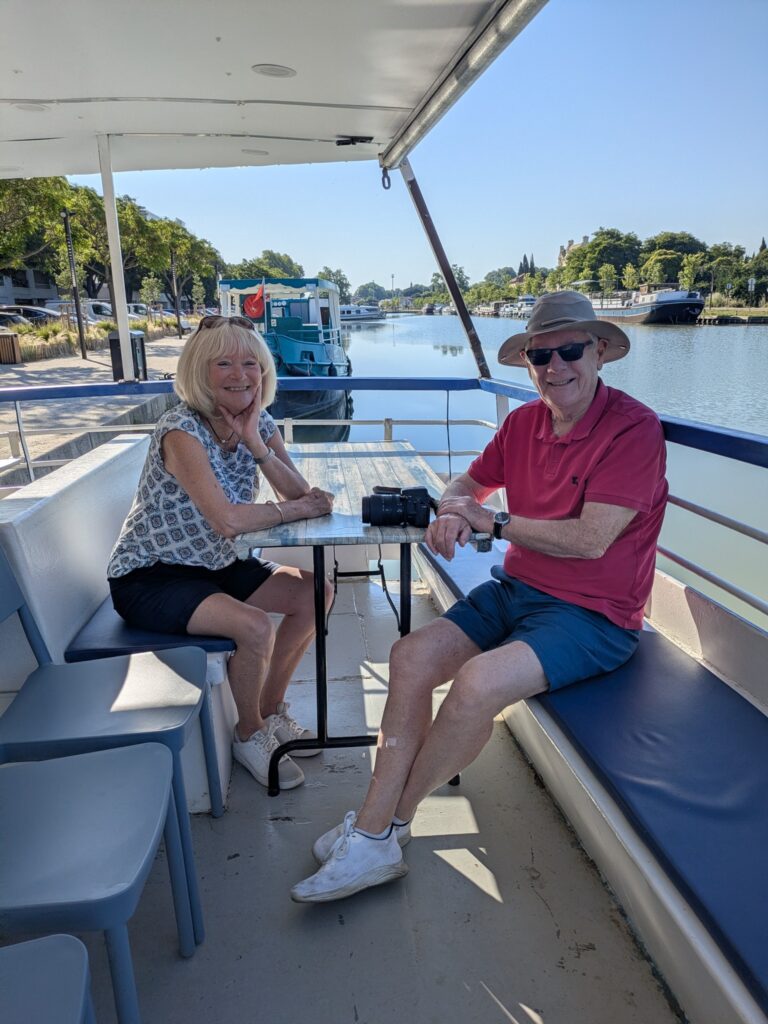
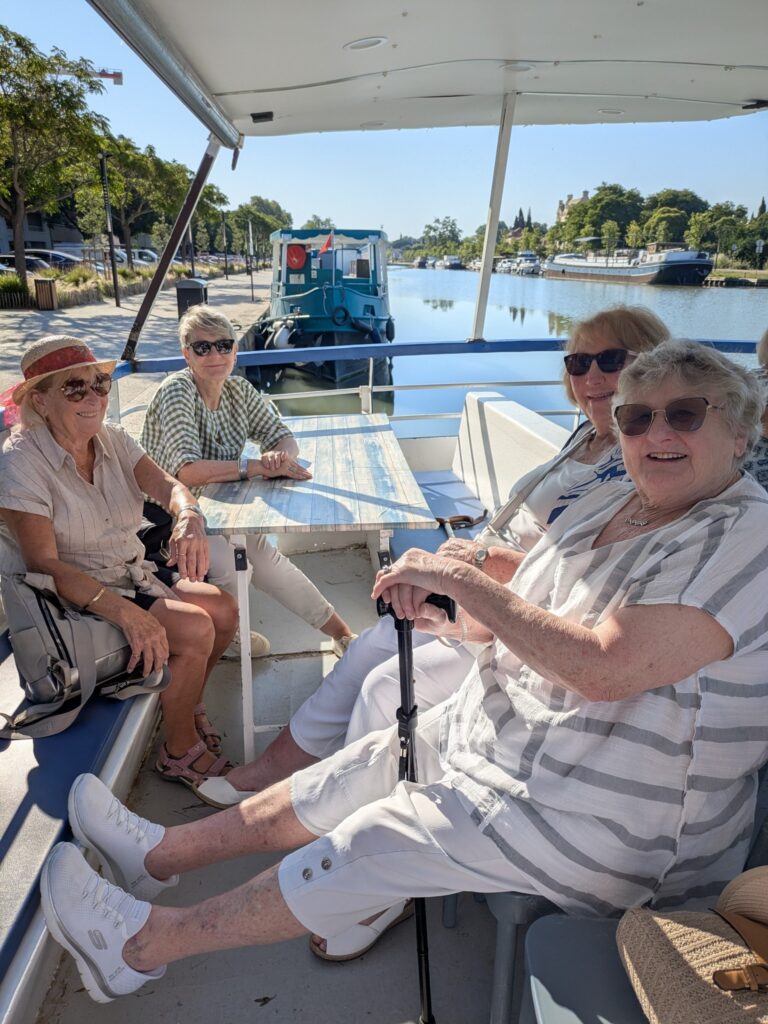
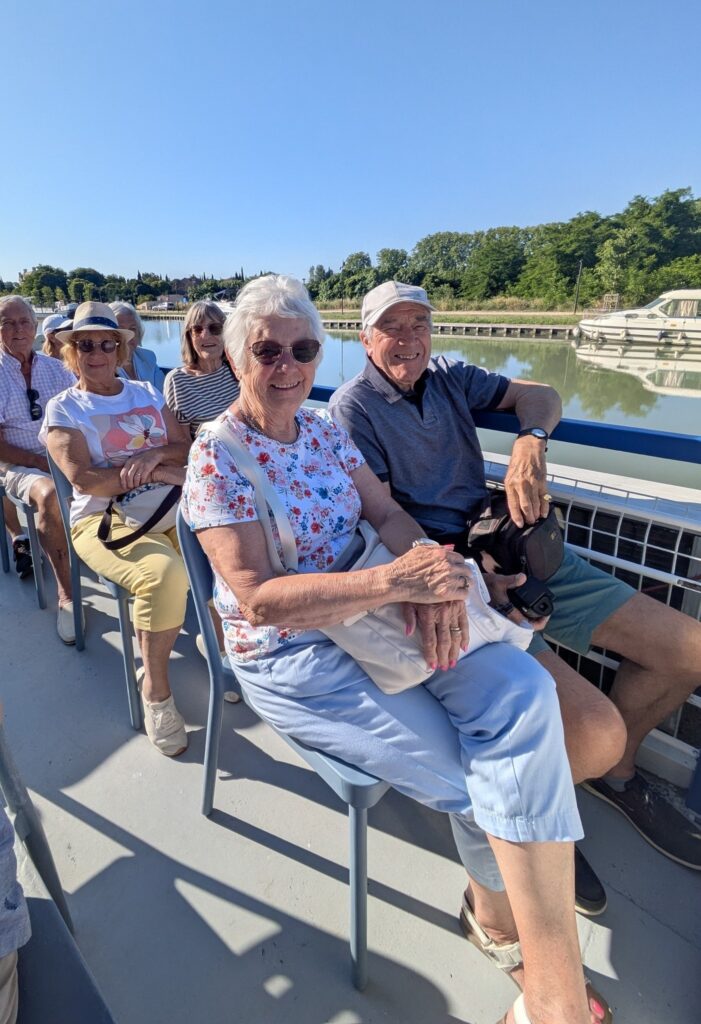
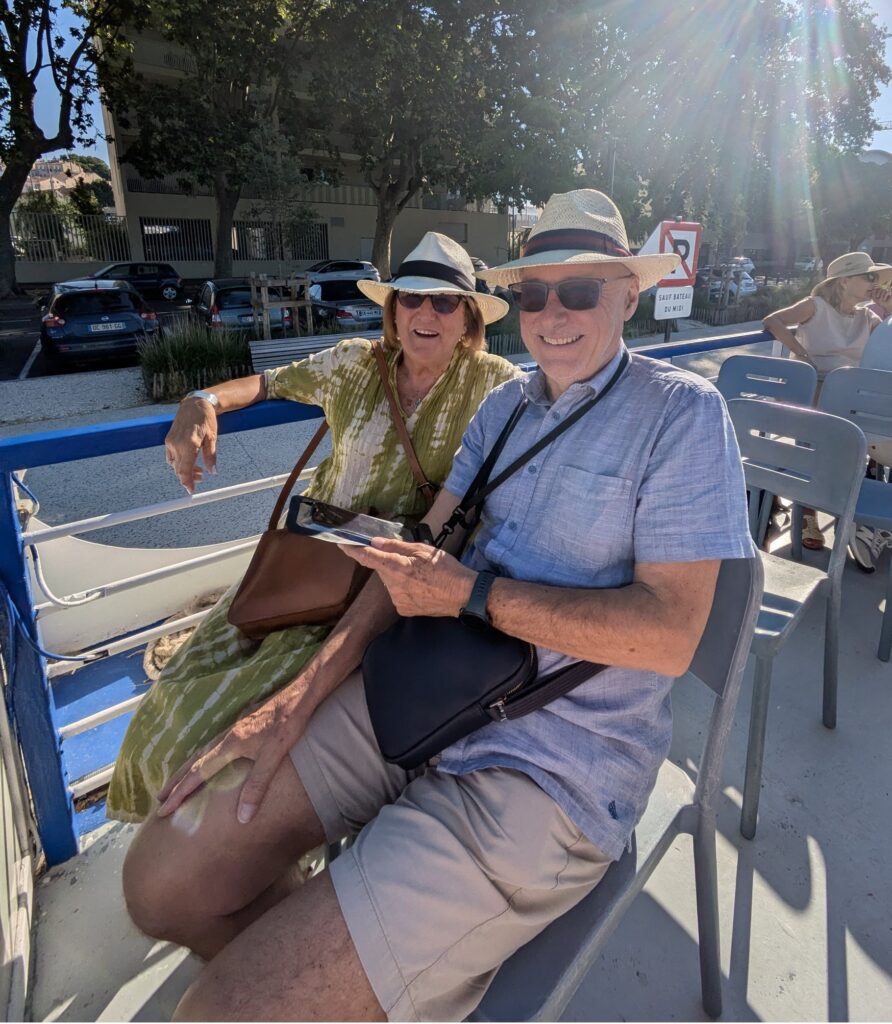
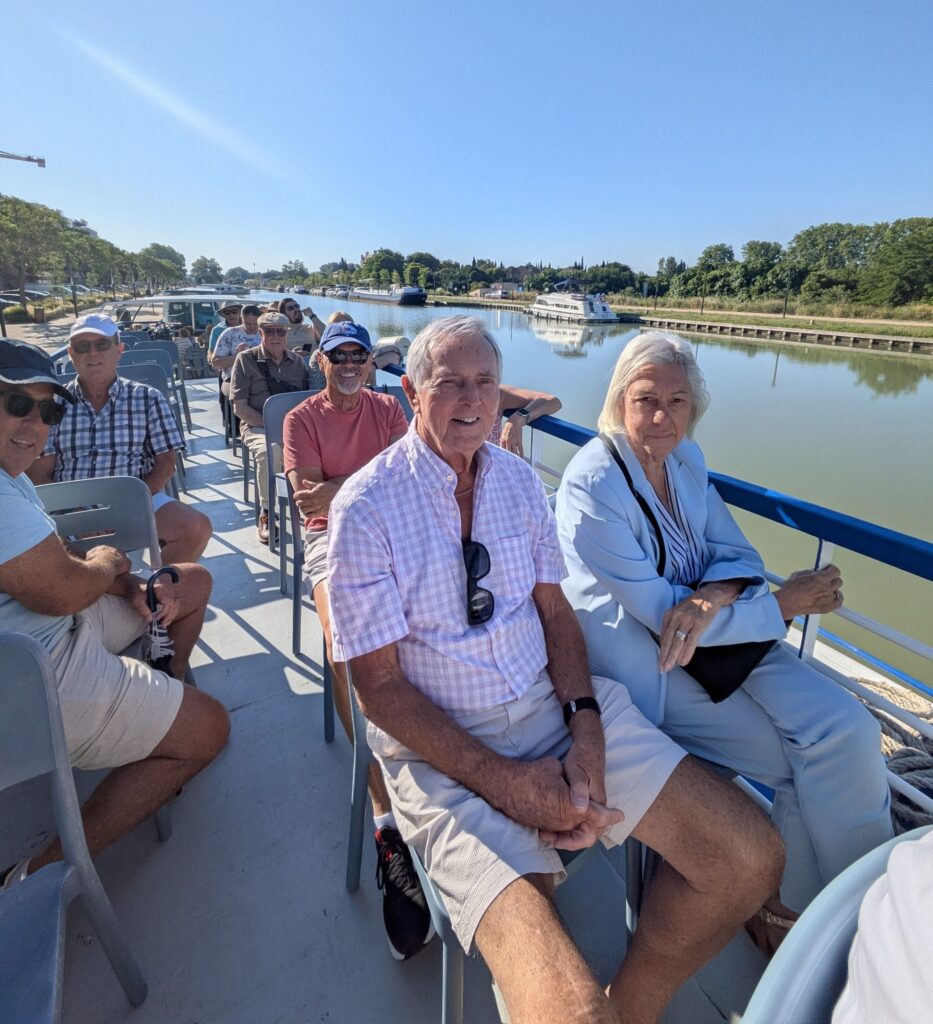
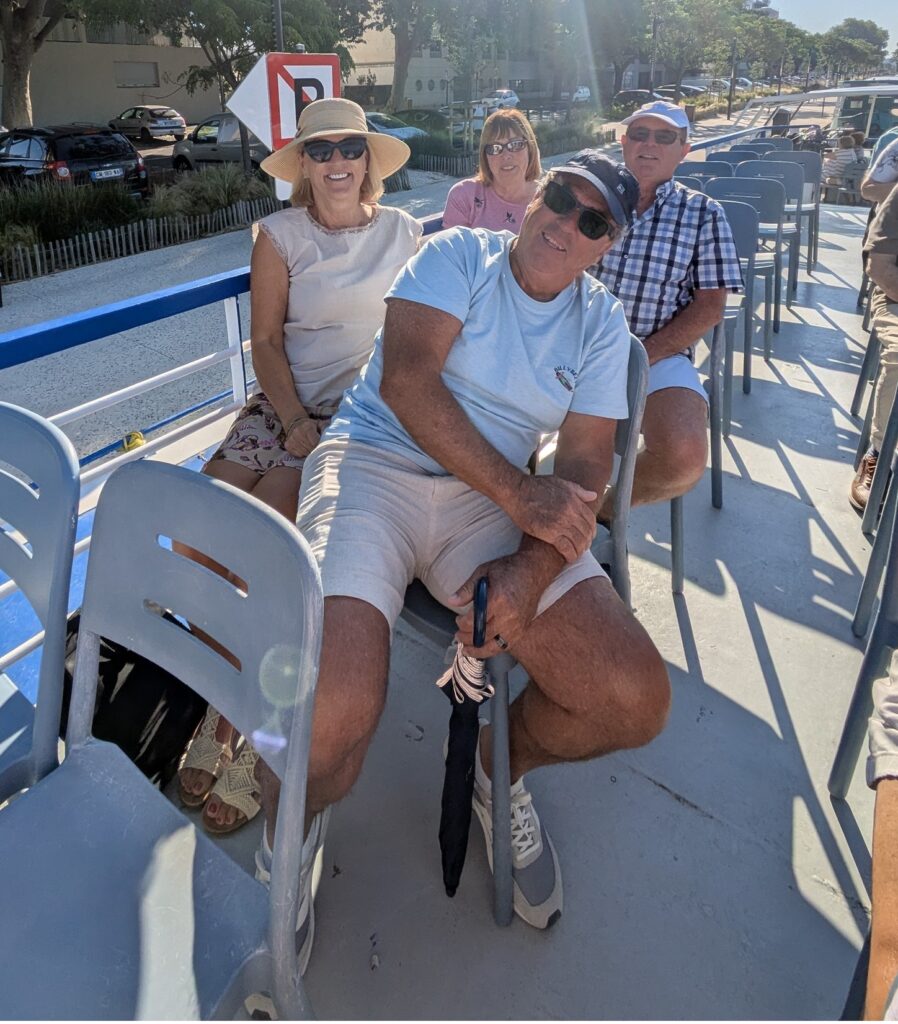
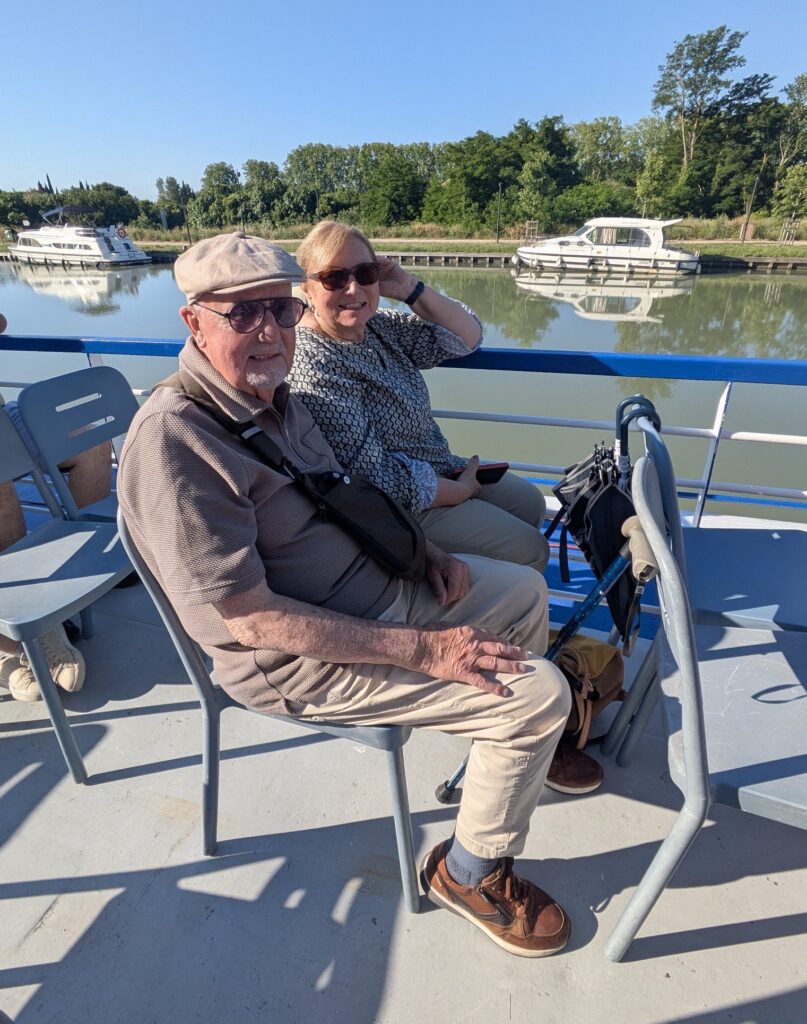
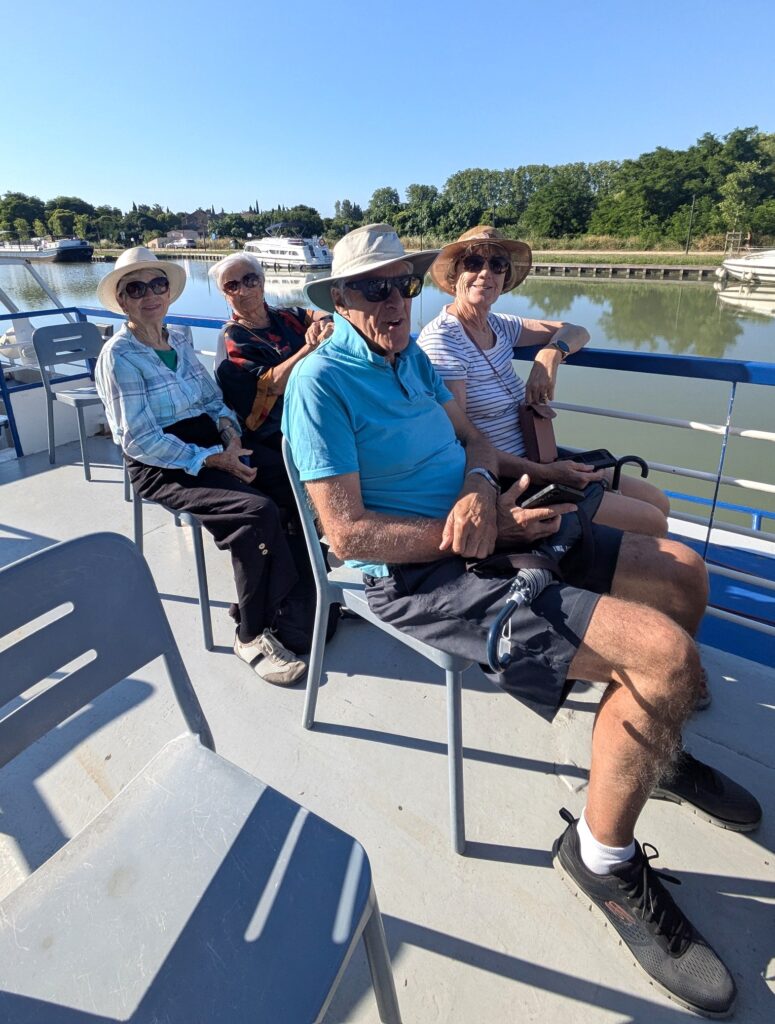
Then we boarded the bus again for the drive to Sete. Here we had around 5 hours to have lunch and see the town. We took the Petit Train to get a reasonable view of the various canals and the port (which takes big cruise ships).
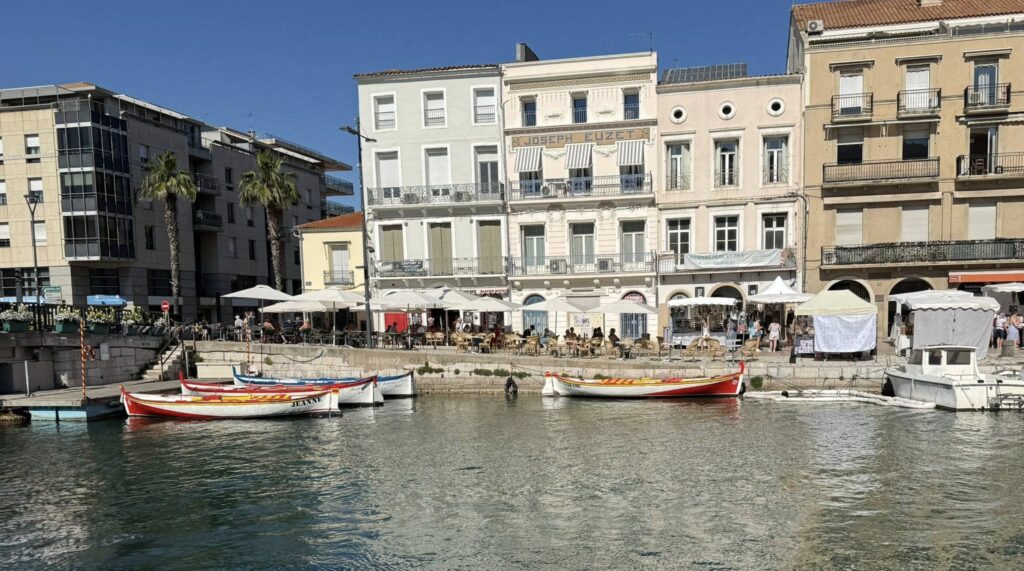
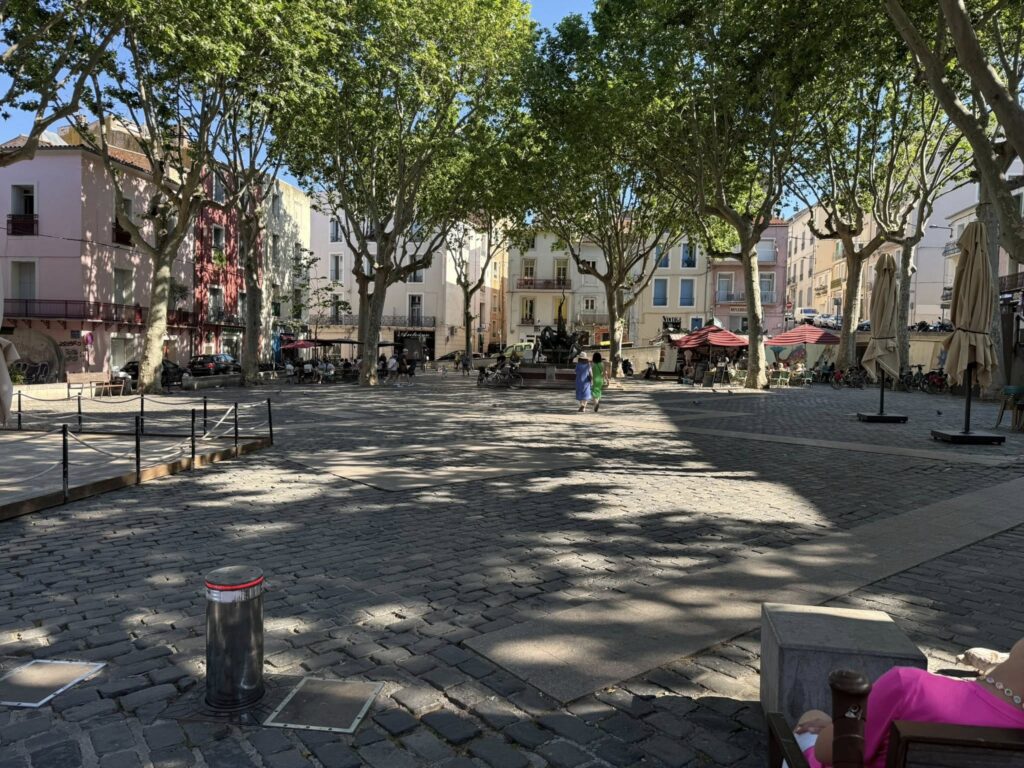
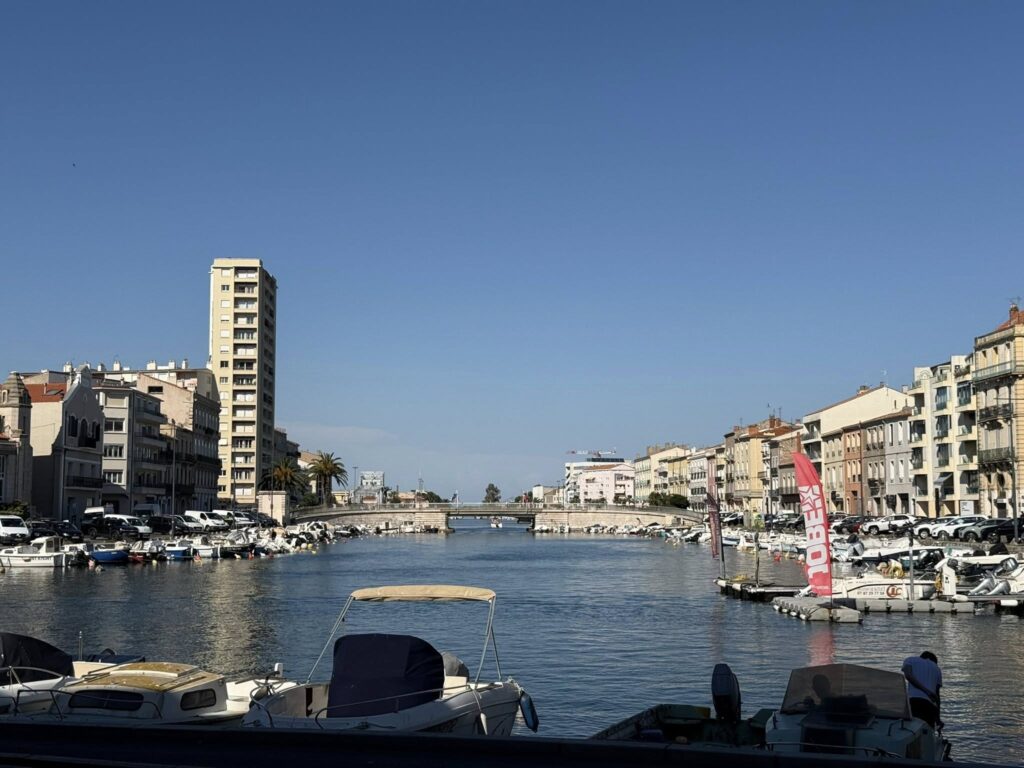
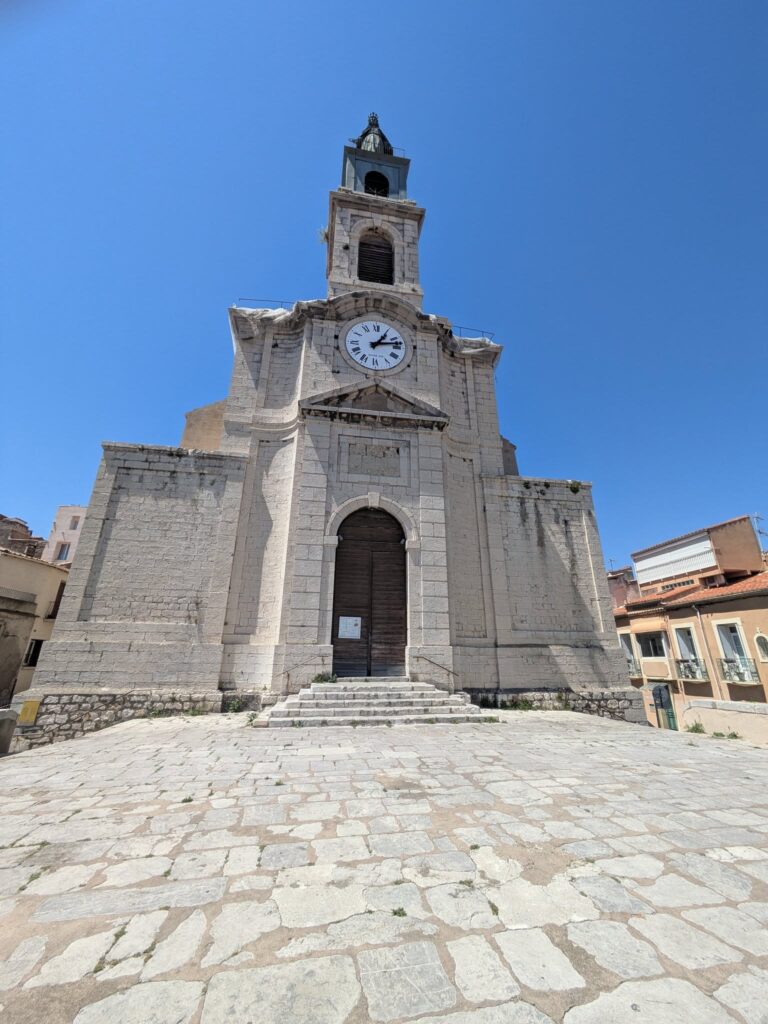
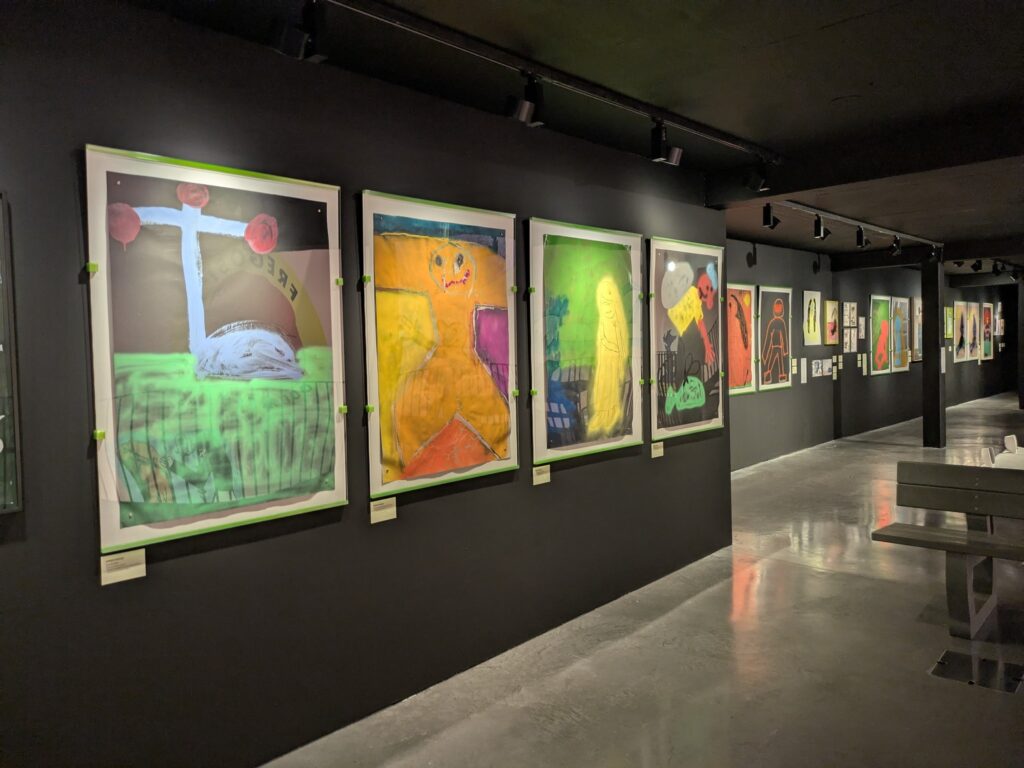
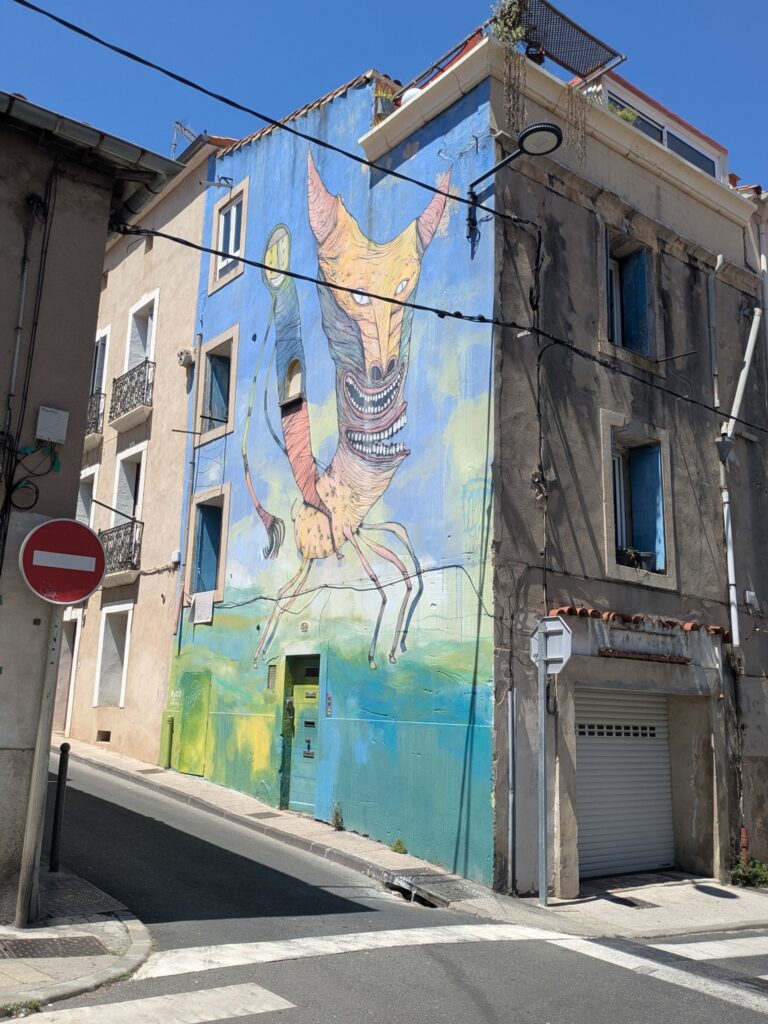
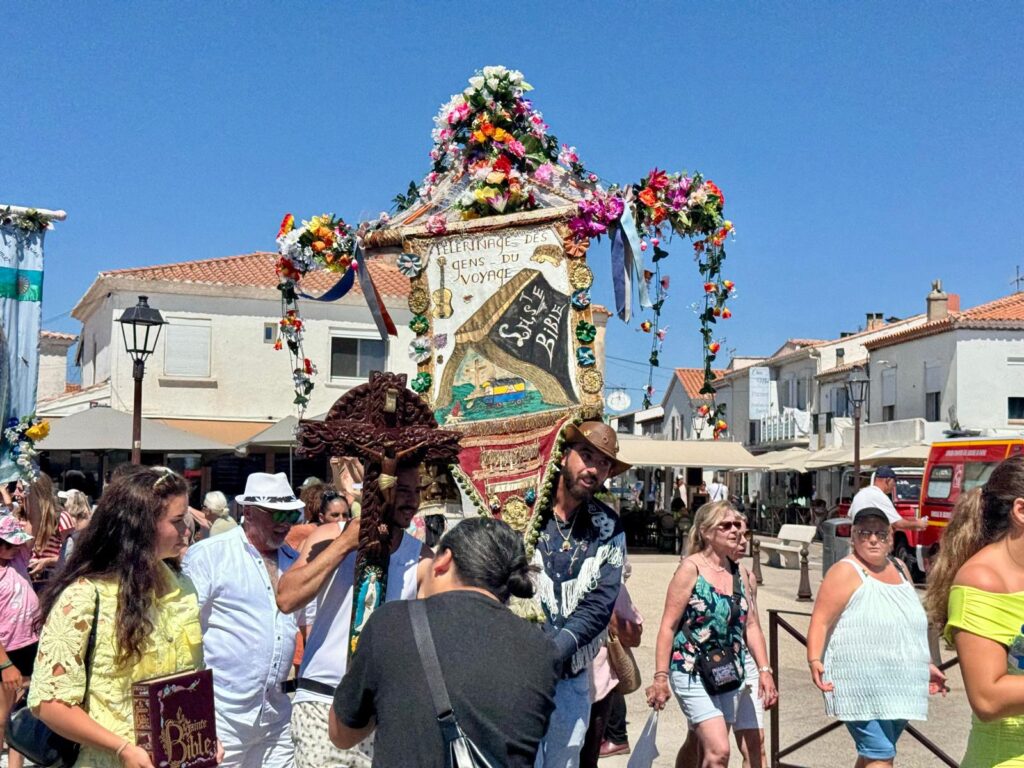
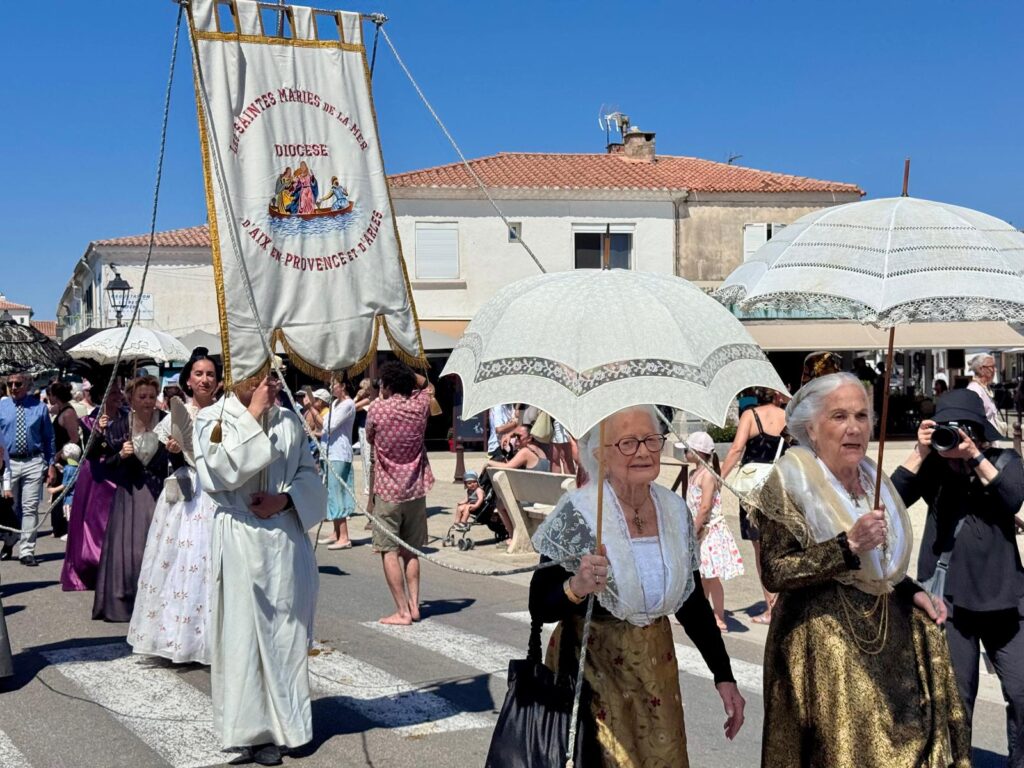
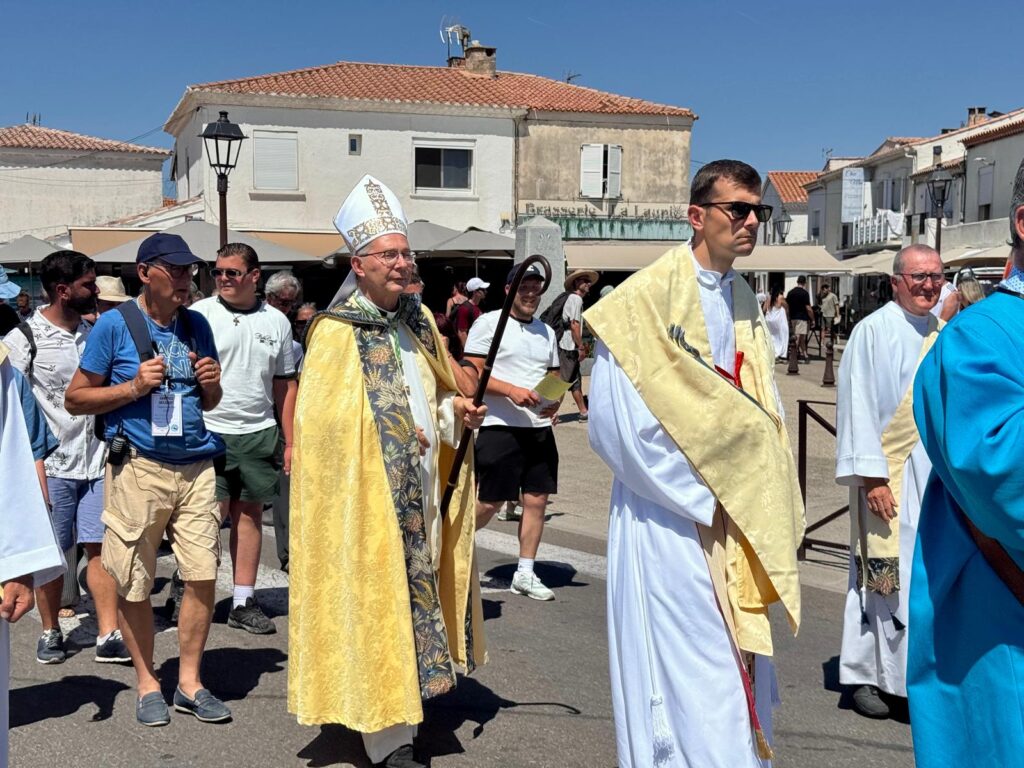
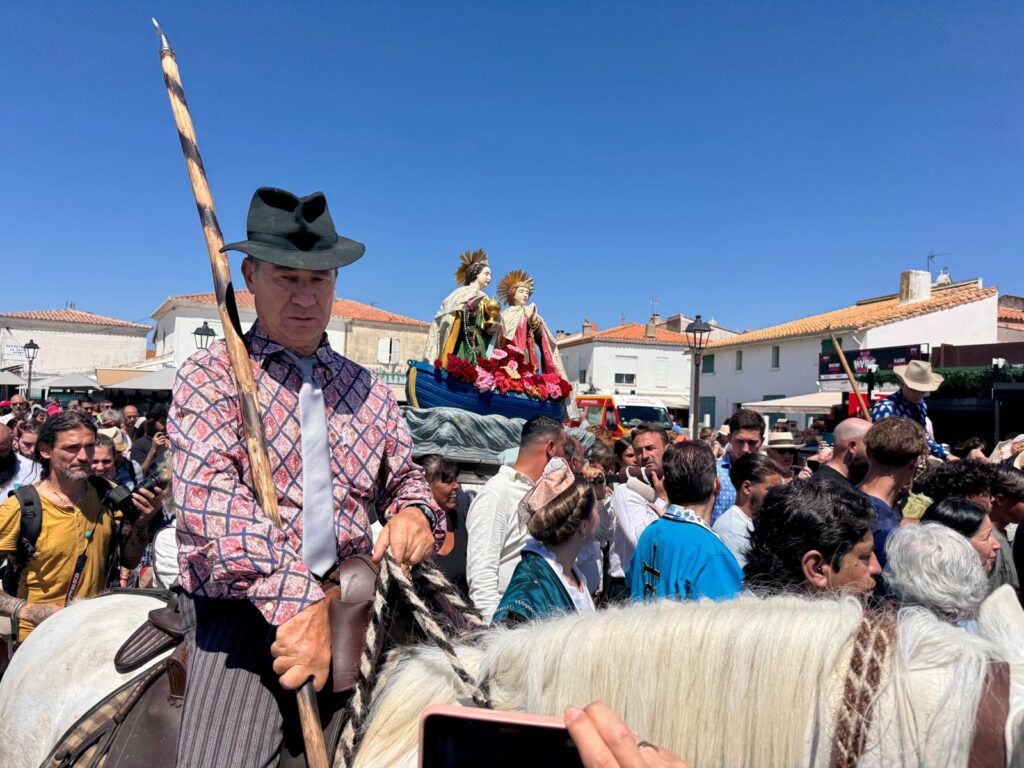
Then back on the bus to head to our hotel in Les Saintes Maries de la Mer. We arrived as the gypsy festival was finishing for the day. Our driver, Vicente, had to work really hard to get around road closures and randomly parked cars.
Monday 25th May: Arles
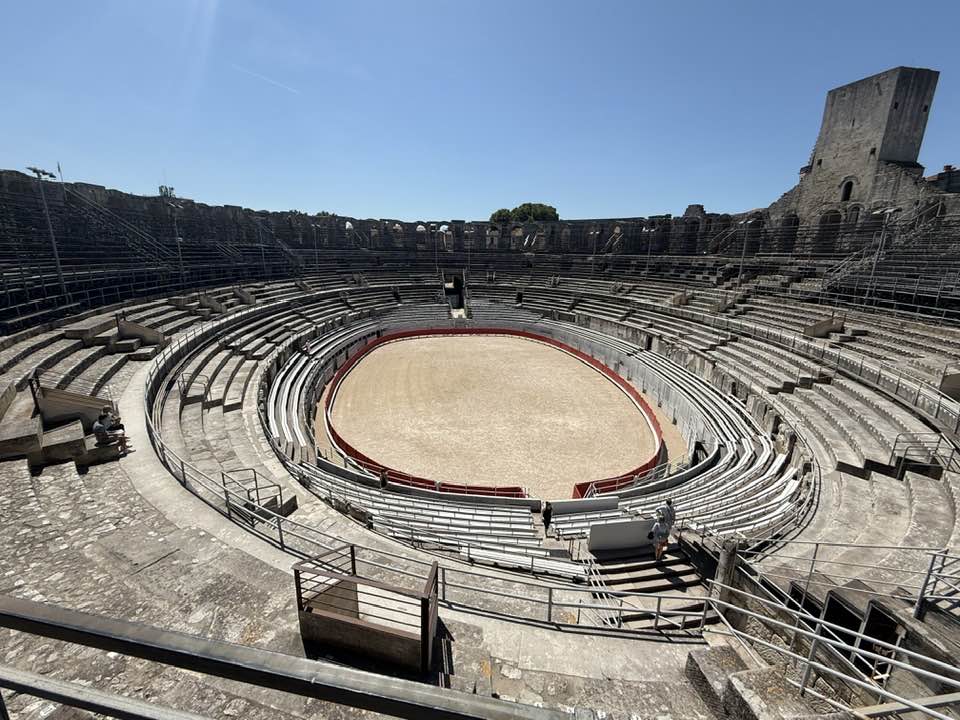
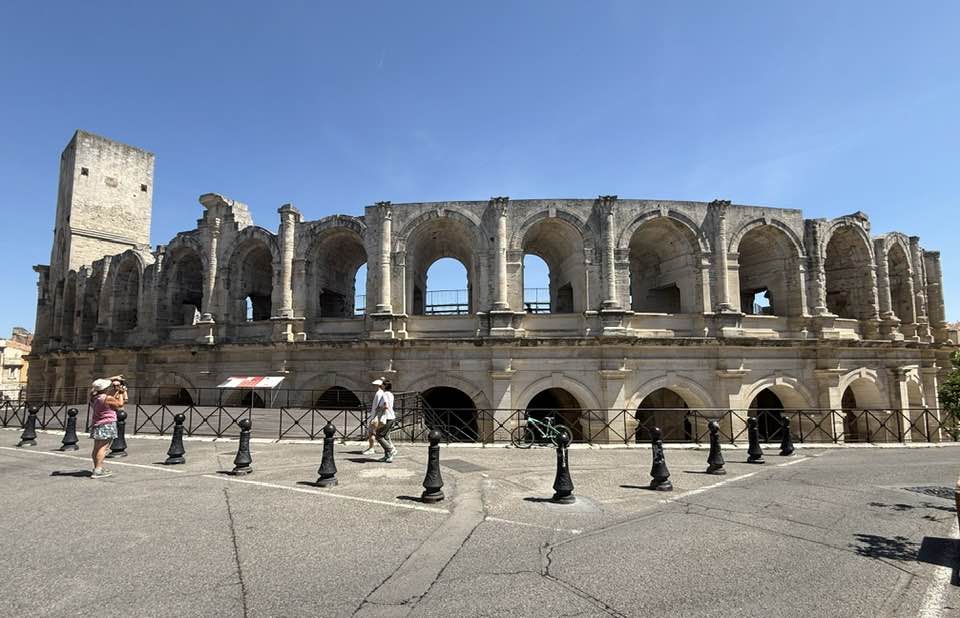
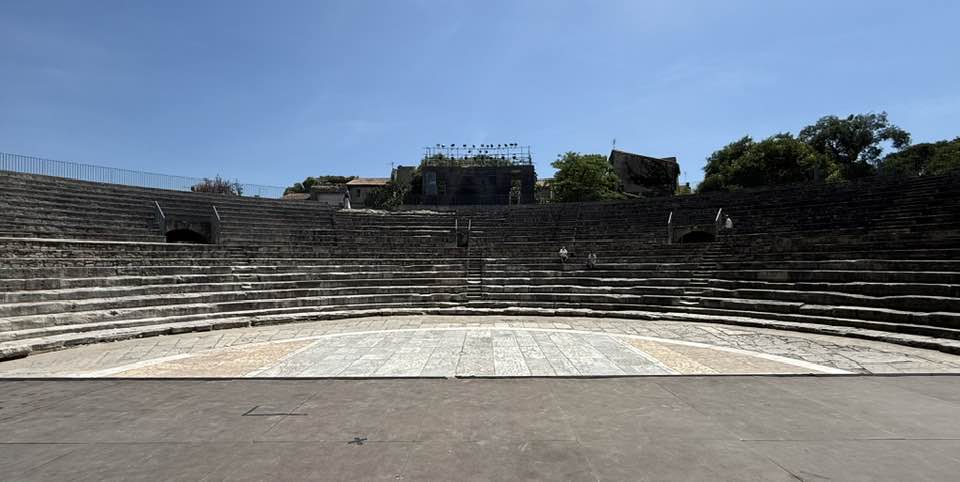
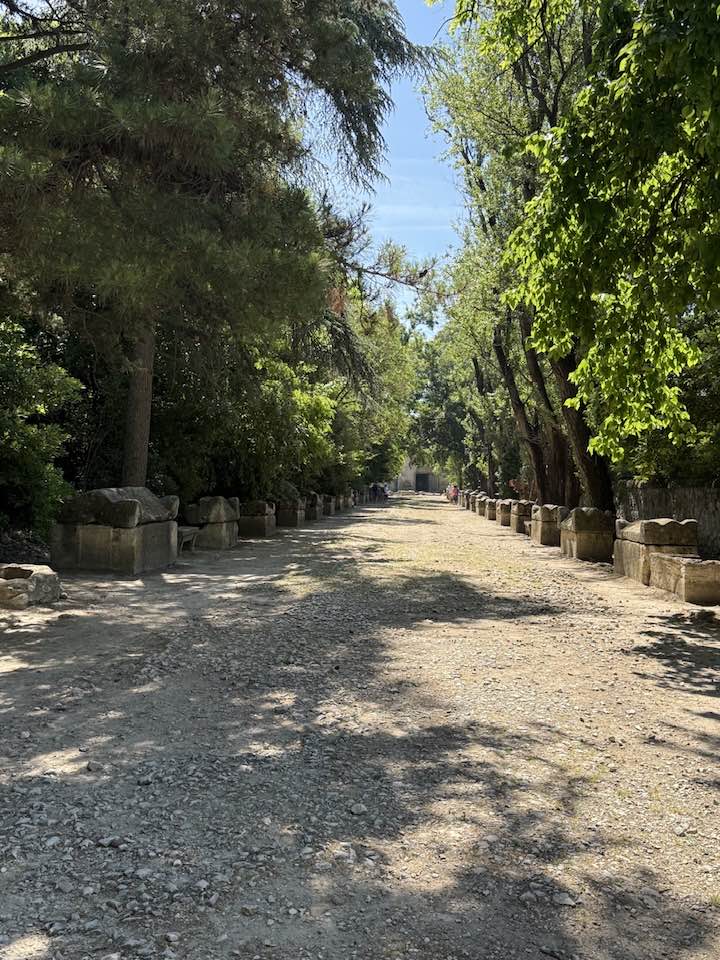
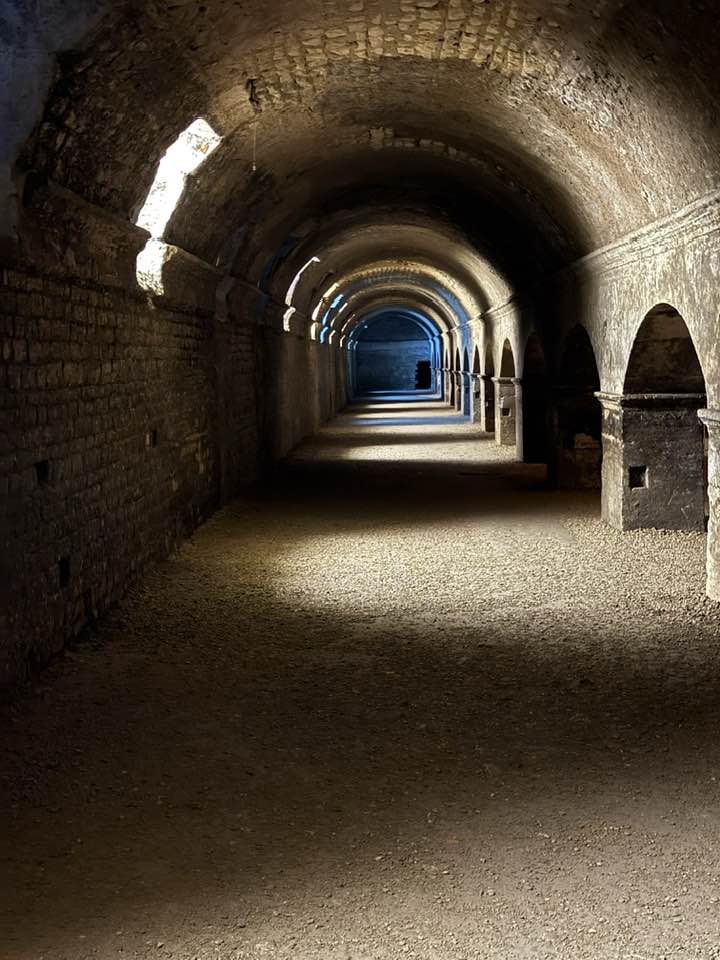
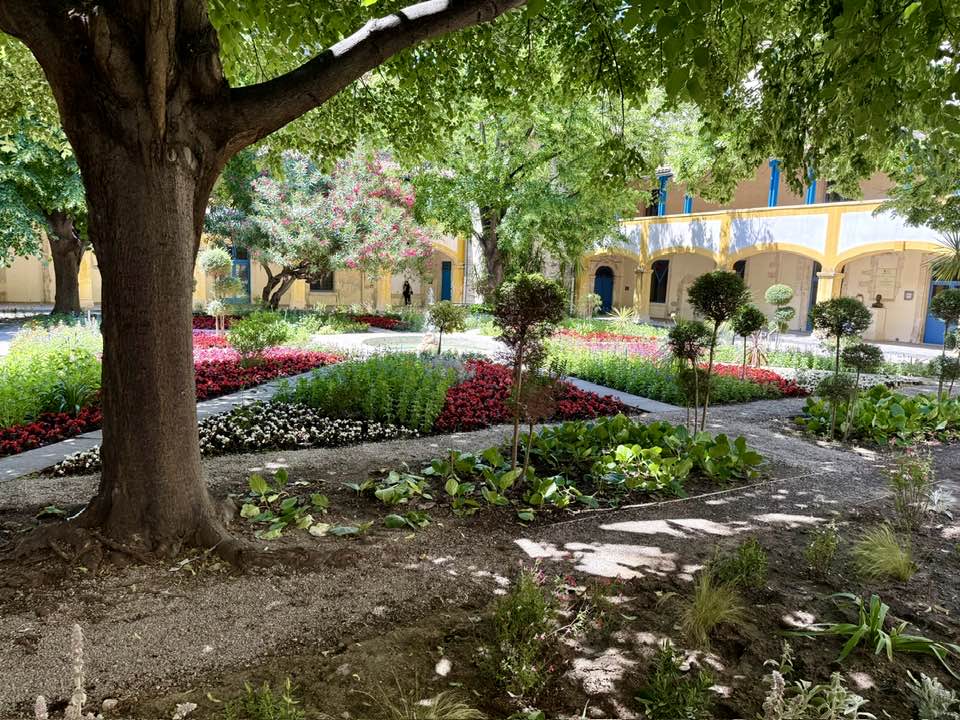
Today we visited the lovely town of Arles. We followed in the footsteps of Van Gogh. First stop the public gardens, and then on to Les Alyscamps, an ancient Roman necropolis, a favourite place for Van Gogh and his friend Paul Gauguin. Then up to the Roman theatre, and right next to it, the Roman Arena. We then walked down to the Rhône where Van Gogh painted The Starry Night. We followed that by visiting the Crypt below the Town Hall which was underneath the Roman forum. We had never seen anything like this before. We finished our visit at the Arles Hospital Garden which is still laid out as it was when Van Gogh was there, being treated for cutting off his ear. With the temperature climbing to 35 degrees, we took numerous breaks for drinks and an ice cream.
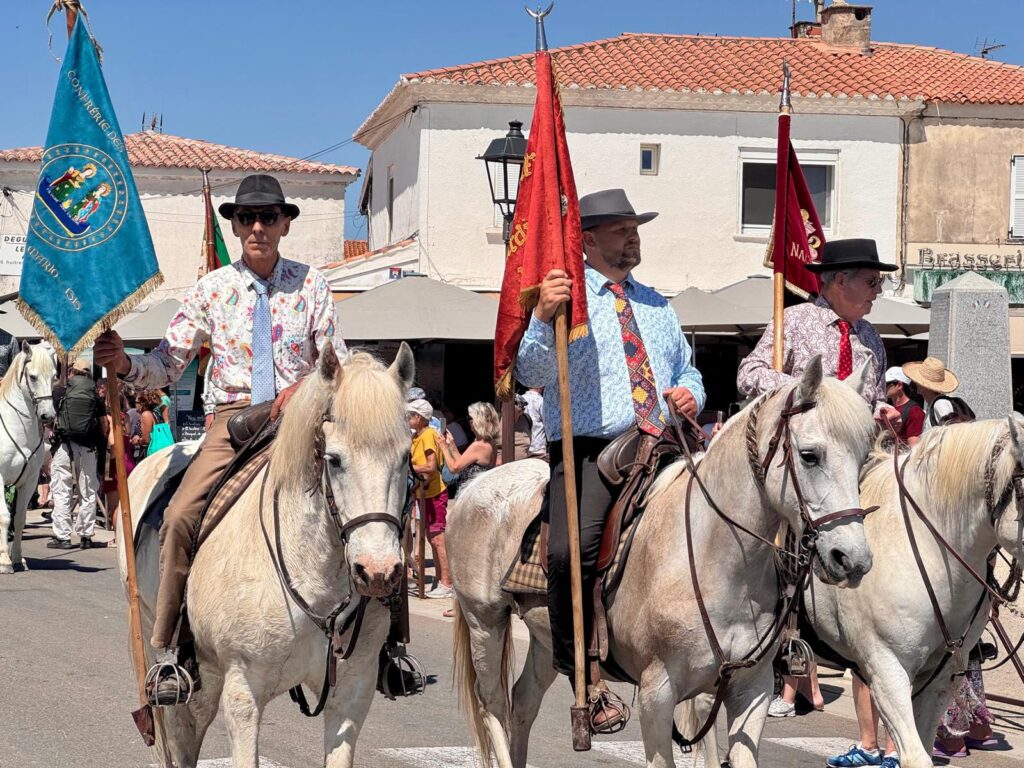
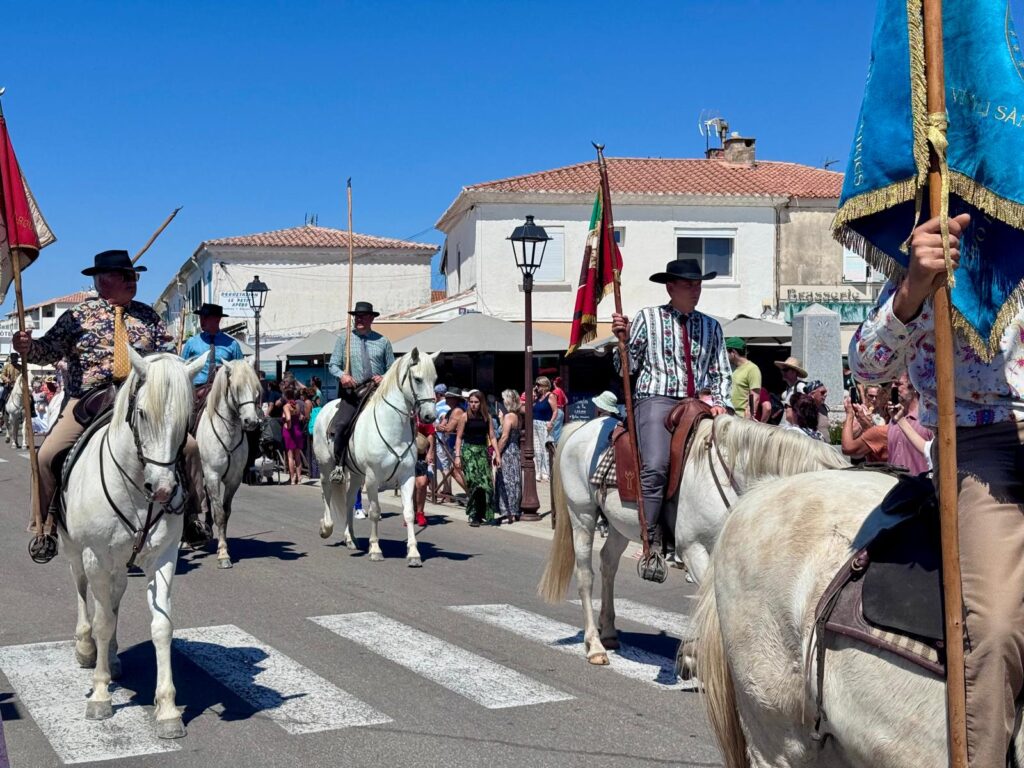
Jill & Nick decided to spend the day in Les Saintes Maries de la Mer, and Jill took these lovely photos of the gypsy procession, where the statue of Sara-la-Kali, or the Black Sara (the patron saint of gypsies), is carried from the church to the sea during the festival. Her remains are said to be in the crypt under the church.
Tuesday 26th May: Le Grau-du-Roi, France
Today we visited Le Grau-du-Roi. We boarded a boat that took us out on to the lagoon, passing a mussel fisherman. There are a lot of migratory birds here and we spotted a few, including bee-eaters. After a while we turned onto the Royal Canal. We stopped to visit a Manades, a local bull farm. We learned a lot about the bulls and the local sport of “Course Camarguaise”. This sport involves professional players trying to get ribbons and small trophies from the bull’s horns. The bulls are never killed. The bulls live in the Manades from May until November, for the rest of the year they can roam freely through the Camargue with the white horses.
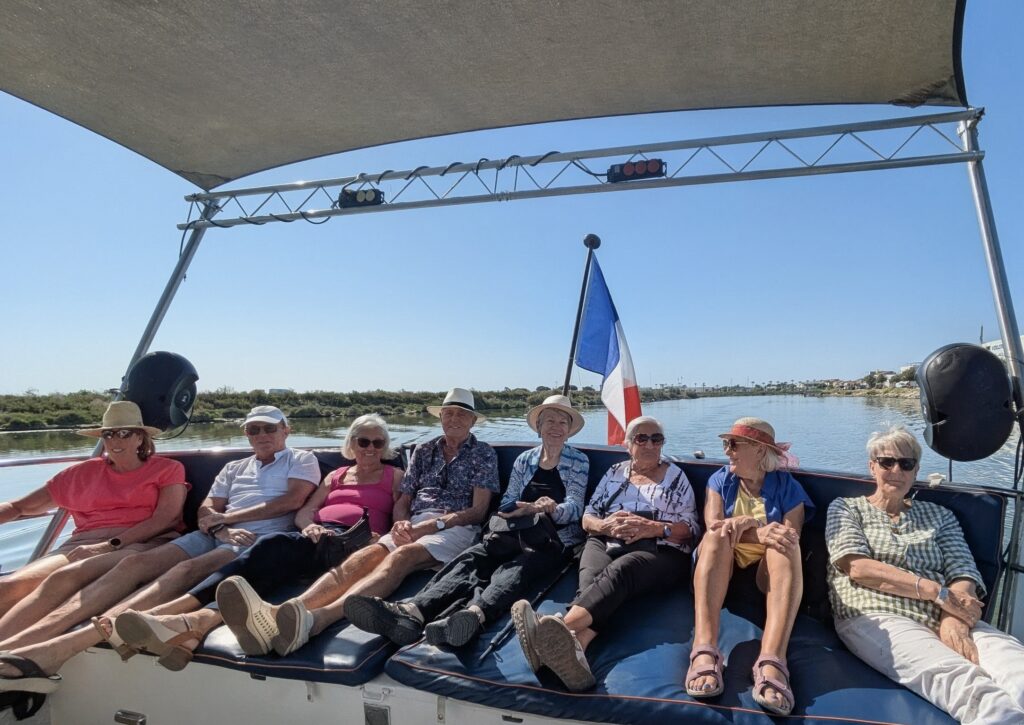
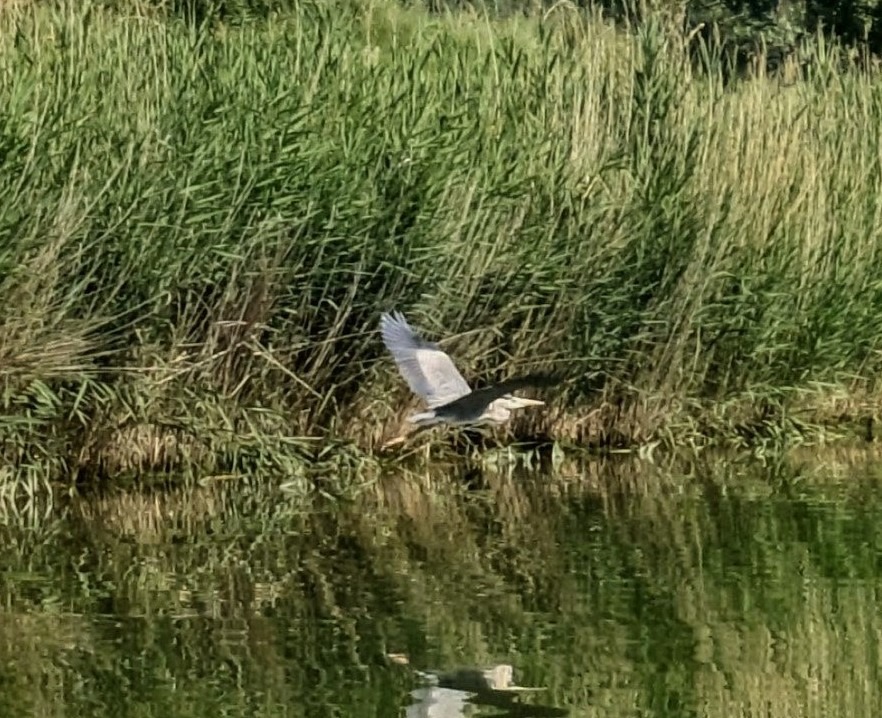
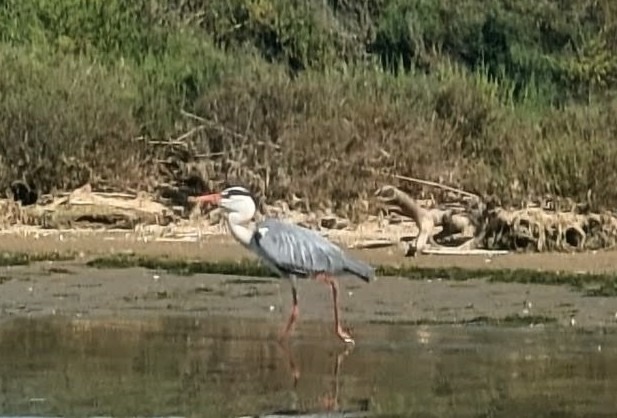
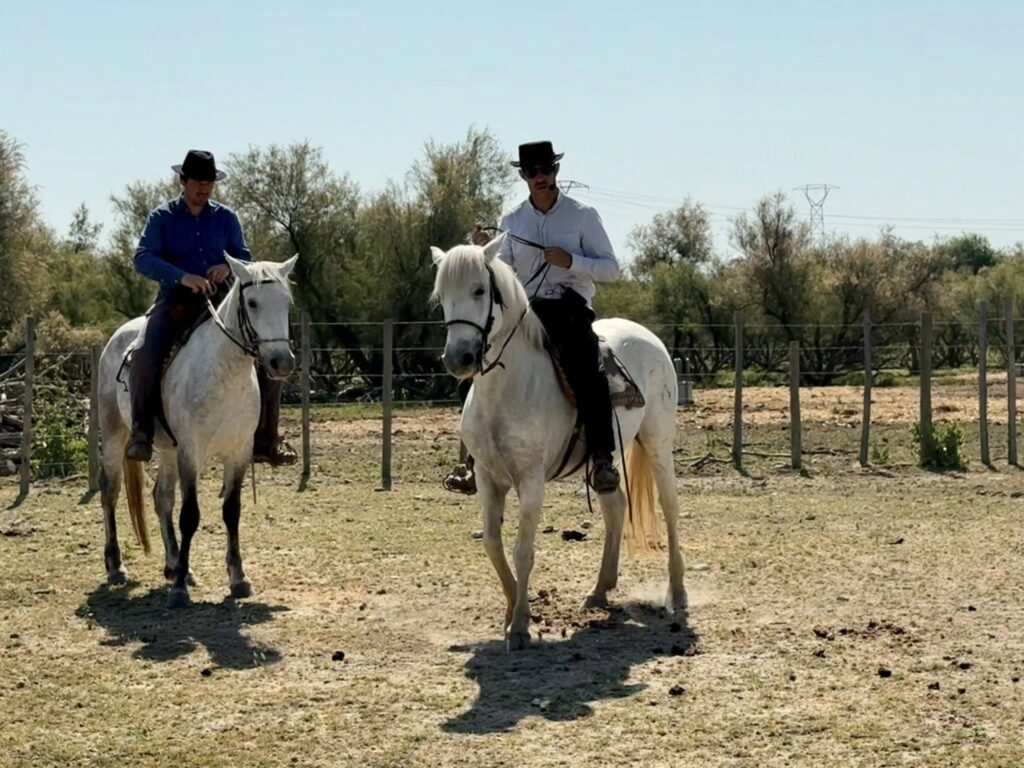
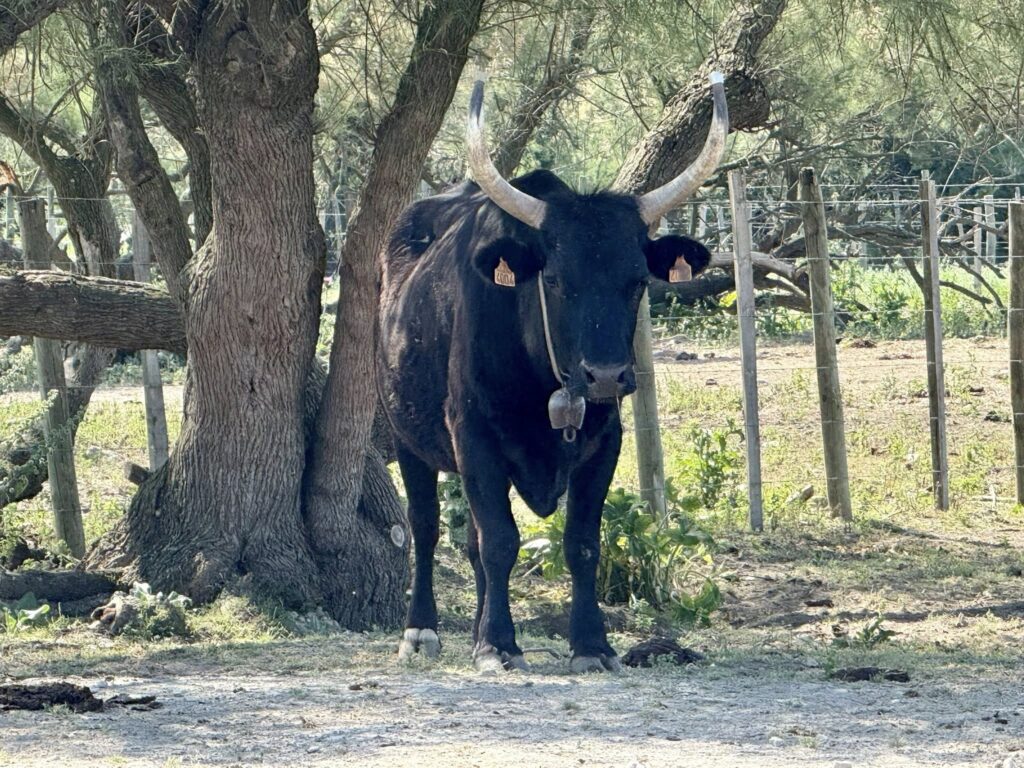
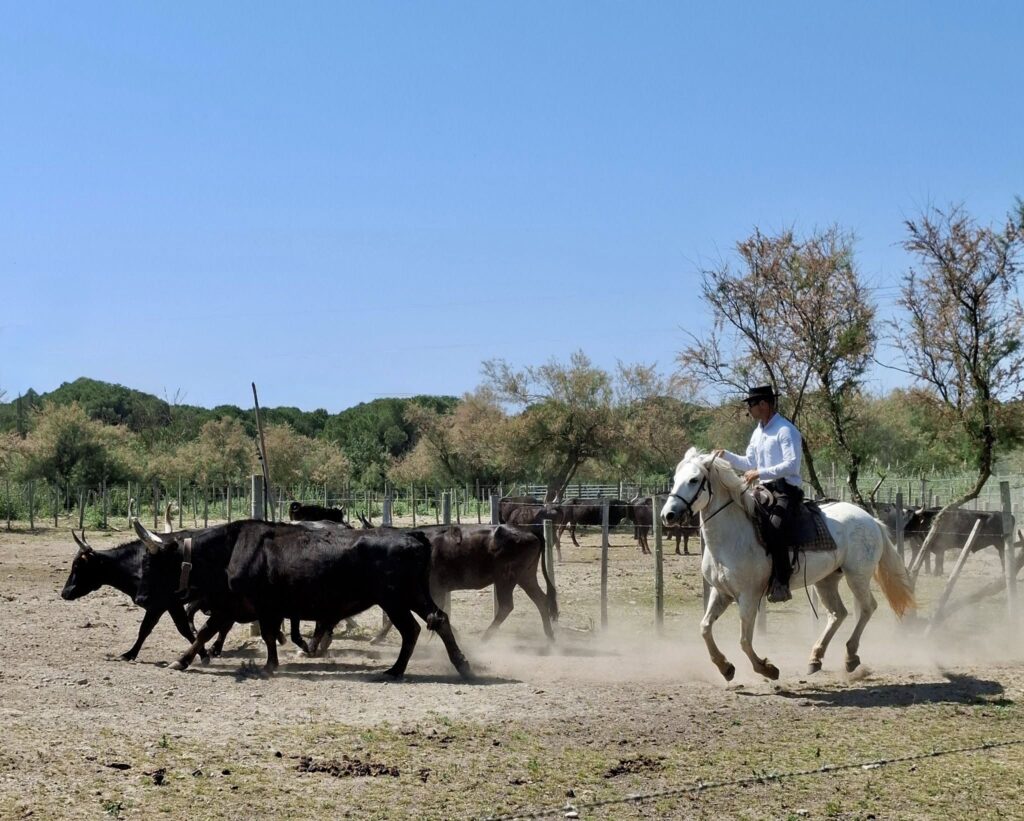
We continued on to pass through Aigues-Mortes, an old medieval village and castle. Le Grau is the second largest French Mediterranean fishing port. After the boat trip we had a lunch break before taking the Petit Train on a trip around the area. Port Camargue is a huge marina that has 4,600 berths and countless apartment buildings.
Wednesday 27th May: ABBAYE DE FONTFROIDE – Narbonne
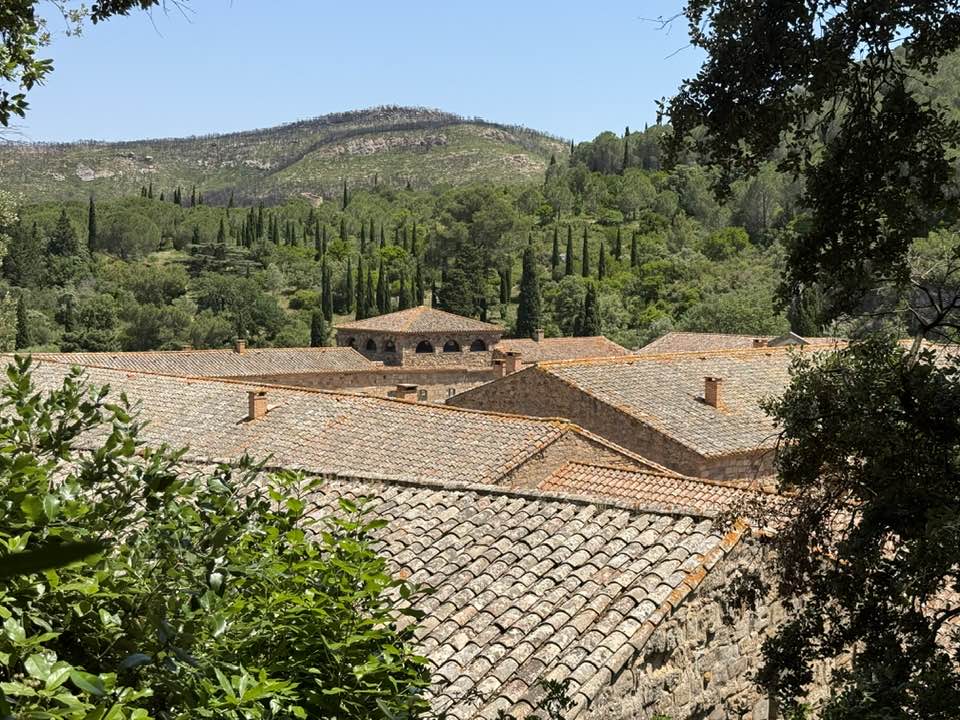
Today we said goodbye to France, but before we crossed the border, we stopped at the Abbaye de Fontfroide. The Abbey was founded in 1093 by the Benedictines but joined the Cistercian order in 1145. In 1908 it was purchased by Gustave Fayet, an artist and collector, and Madeleine d’Andoque, who restored the Abbey. Although it was very hot it was a fabulous place to visit with a lovely rose garden and terraced gardens.
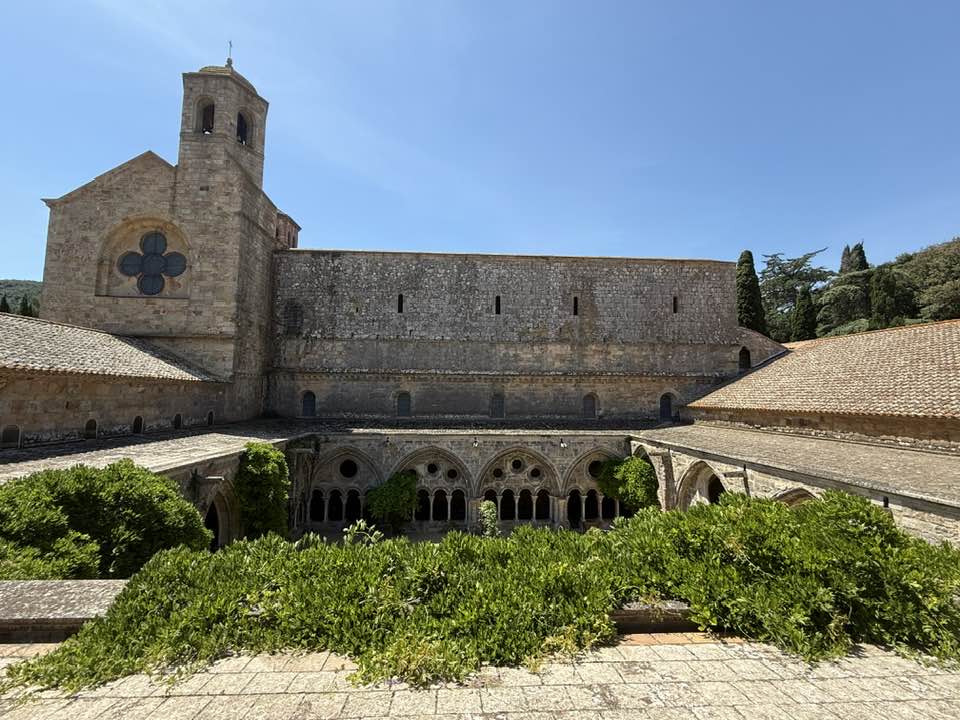
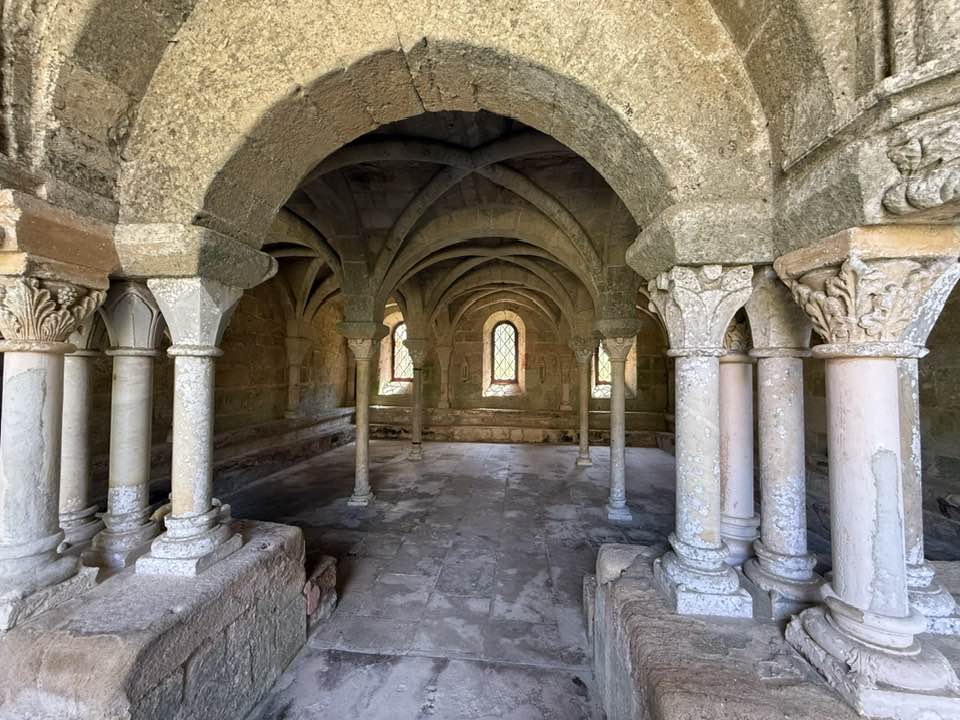
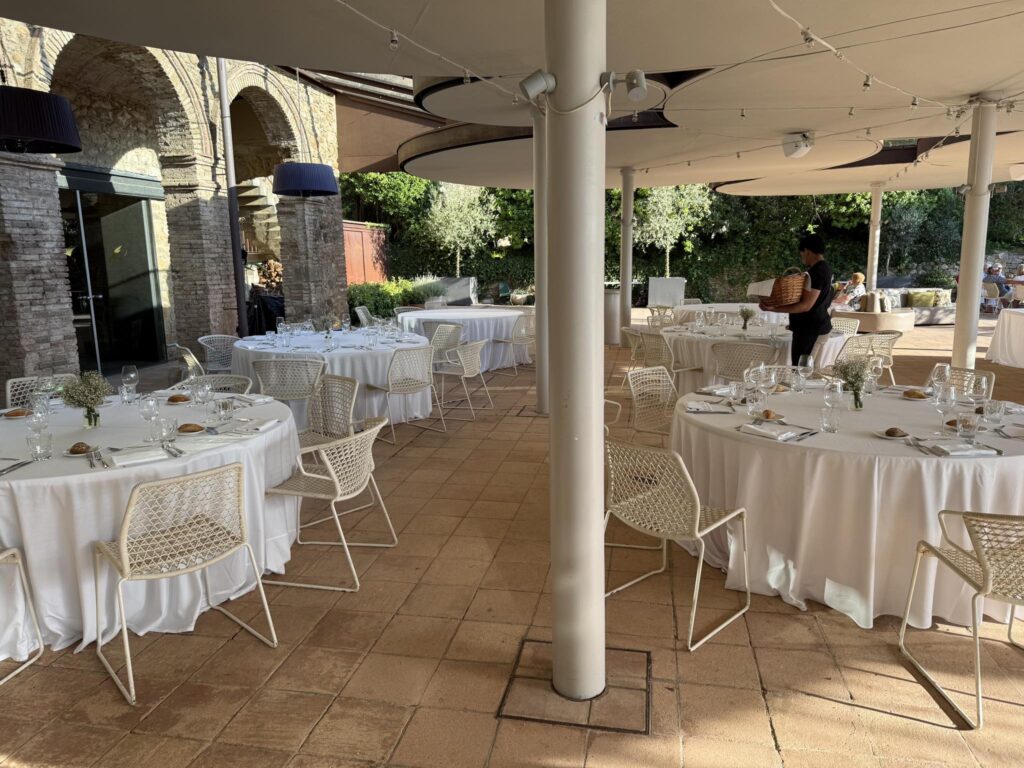
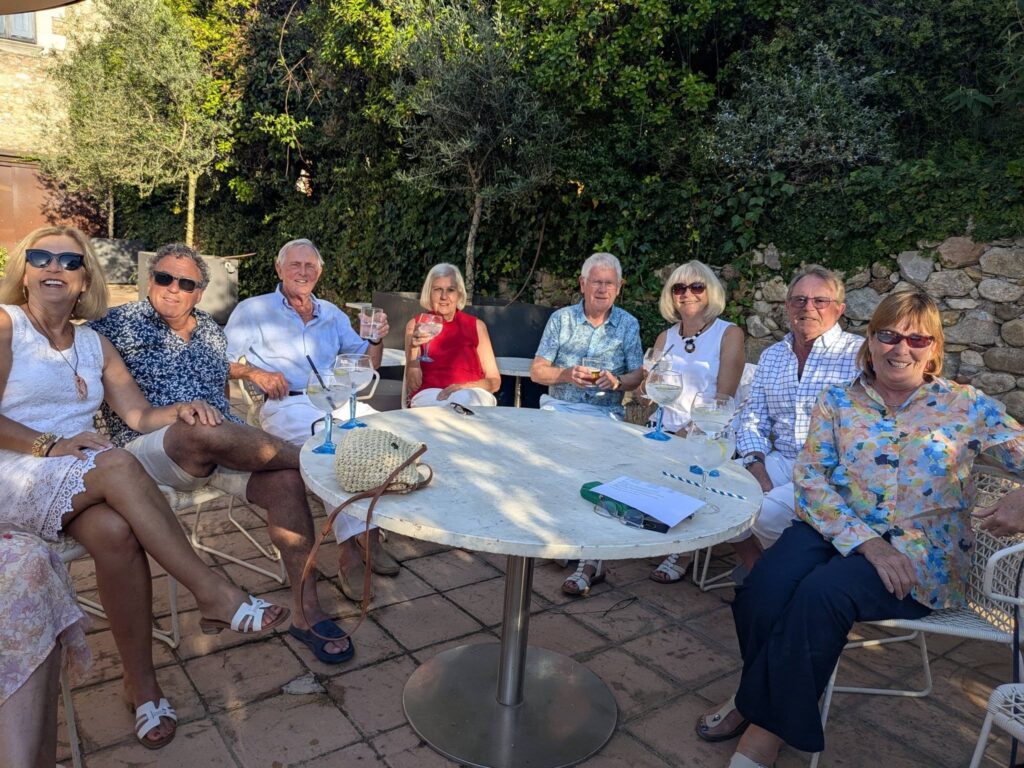
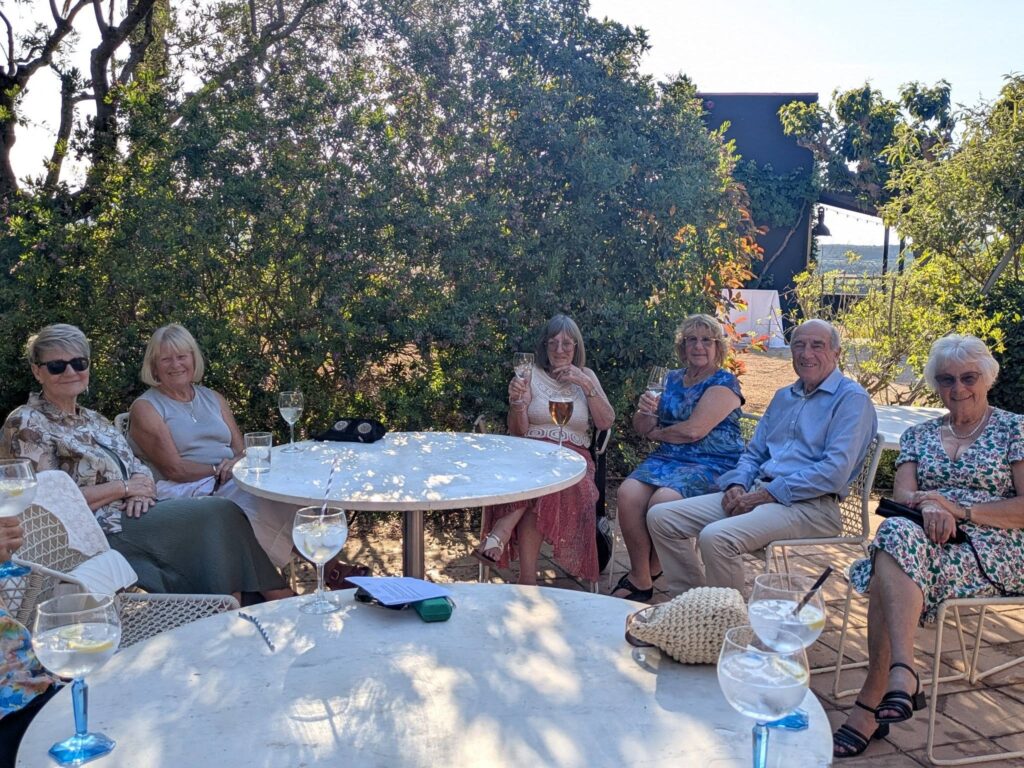
After our visit we crossed the border and arrived at our stay for two nights, Castell d’Emporda. After a swim to cool off we enjoyed a group dinner out on the terrace.
Thursday 28th May: Pals and Peratallada
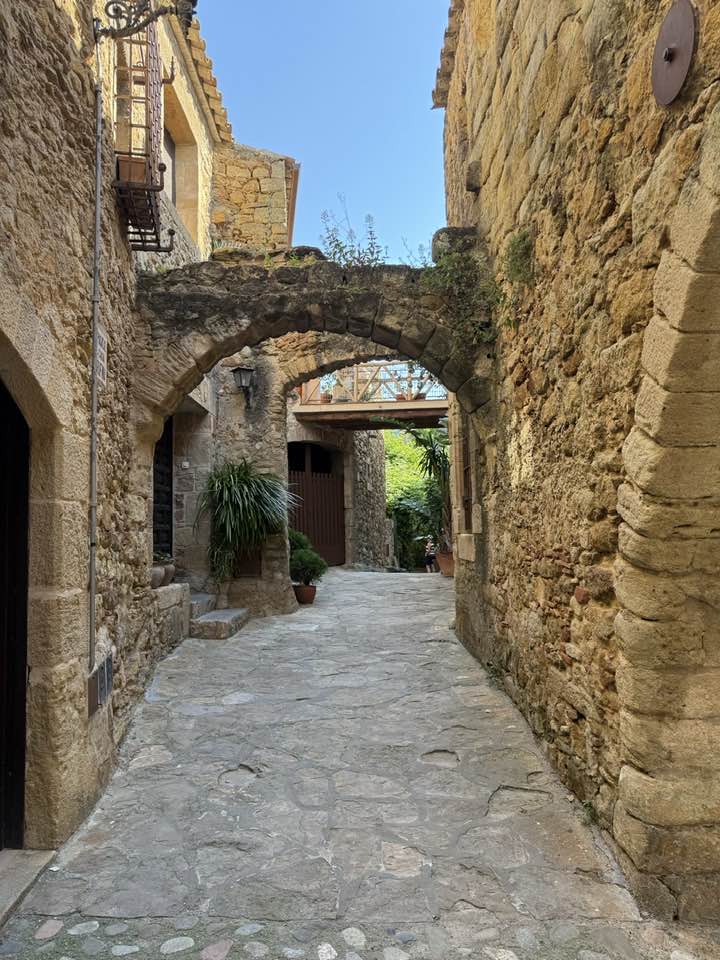
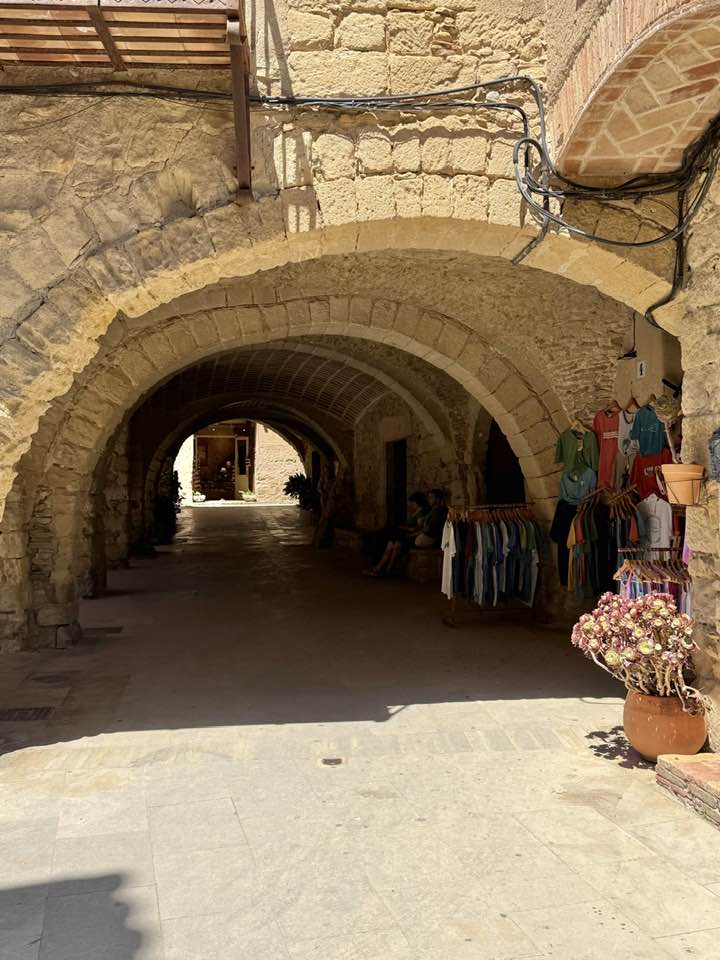
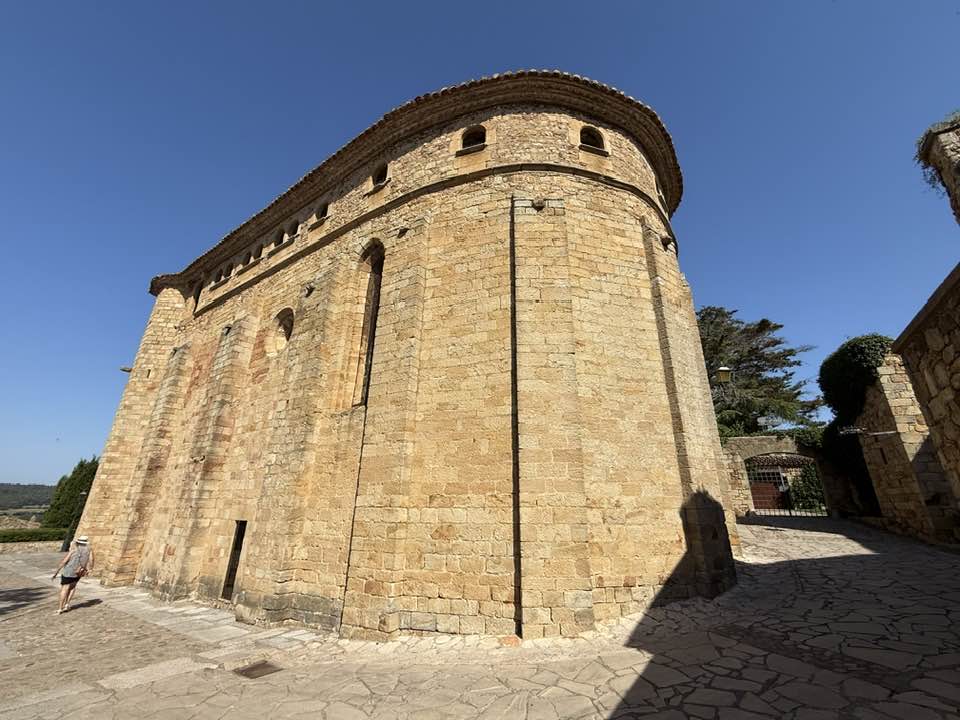
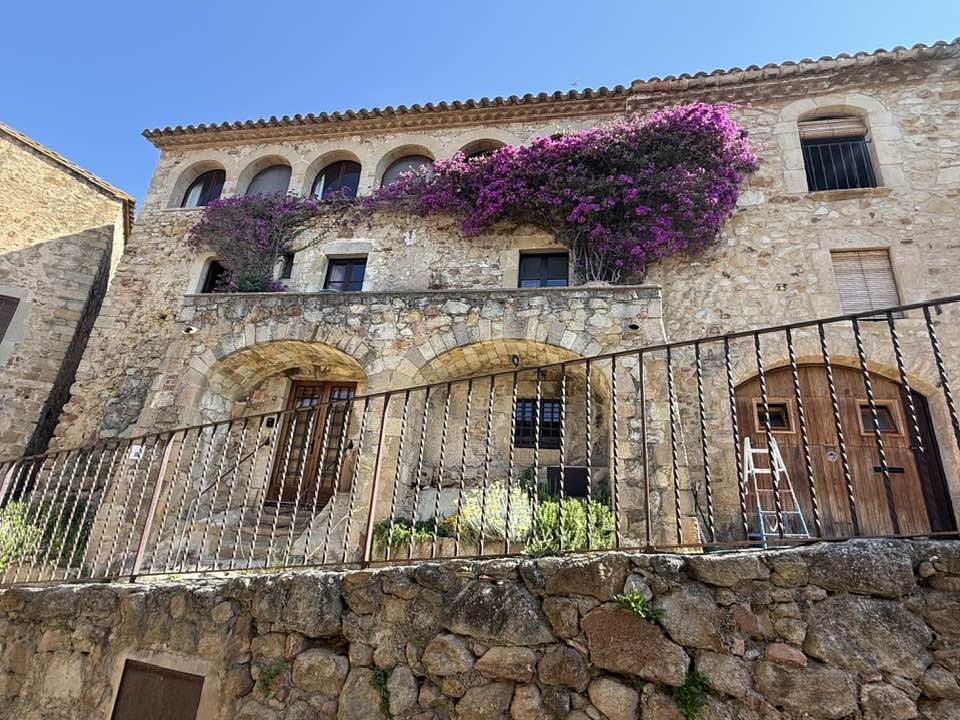
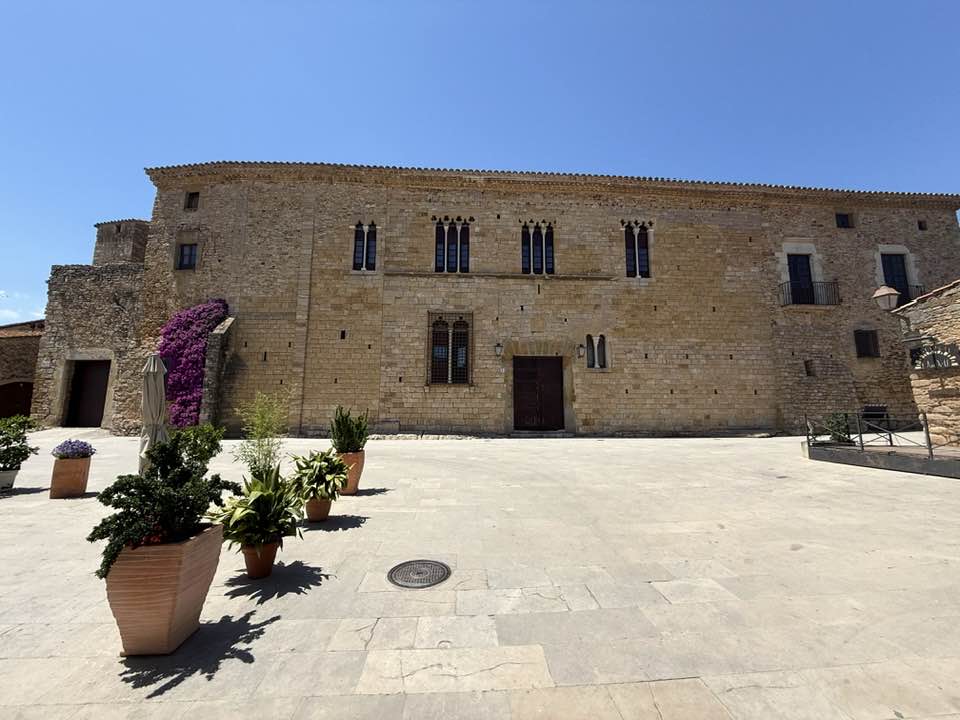
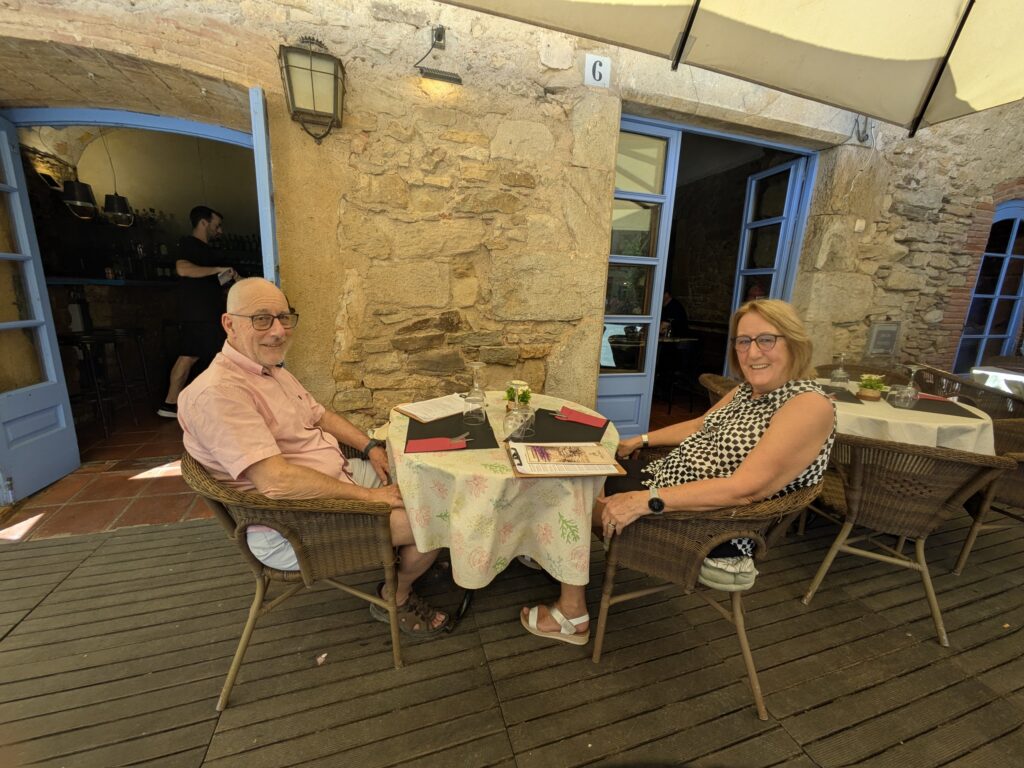
Today we visited two beautiful little villages, Pals and Peratallada. Both villages were very pretty with sandstone buildings, alleys and narrow streets. The church in Pals was interesting and outside was an interesting half tower, built to help defend the town. With weather warnings for high temperatures, we managed to stop frequently for drinks. By the time we reached Peratallada it was very hot and a lot of us went for a snack in cool bars and restaurants.
Friday 29th May: Sant Sadurni
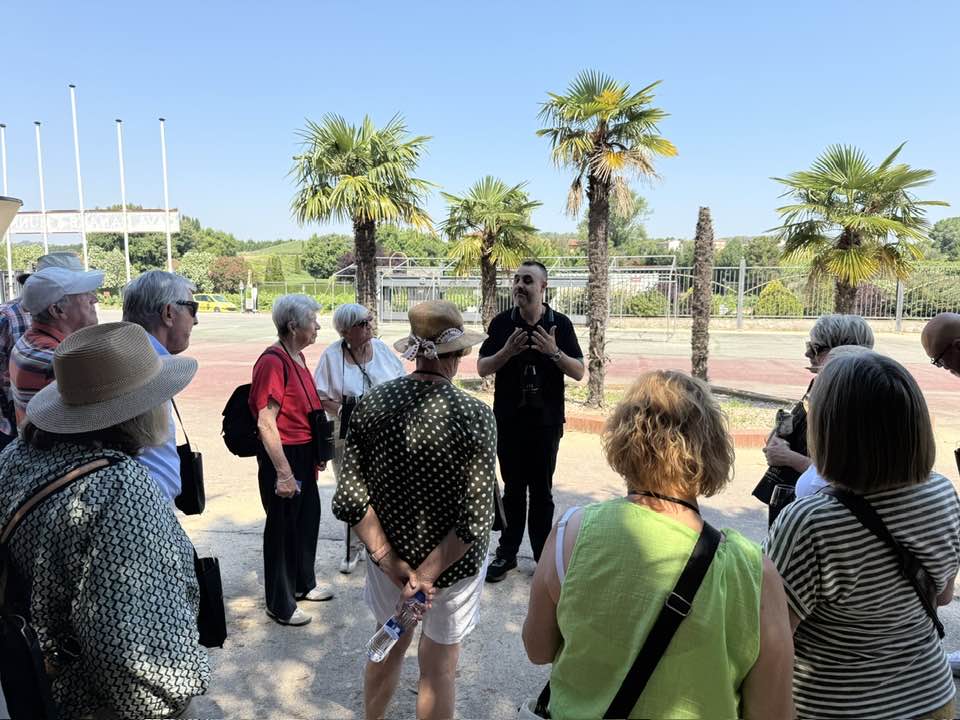
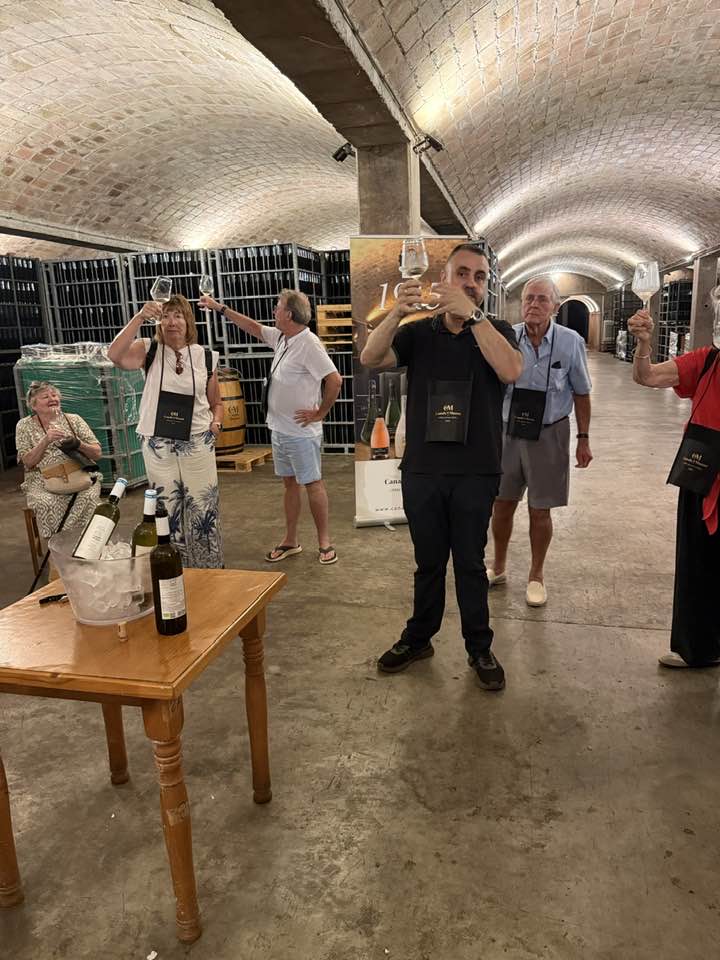
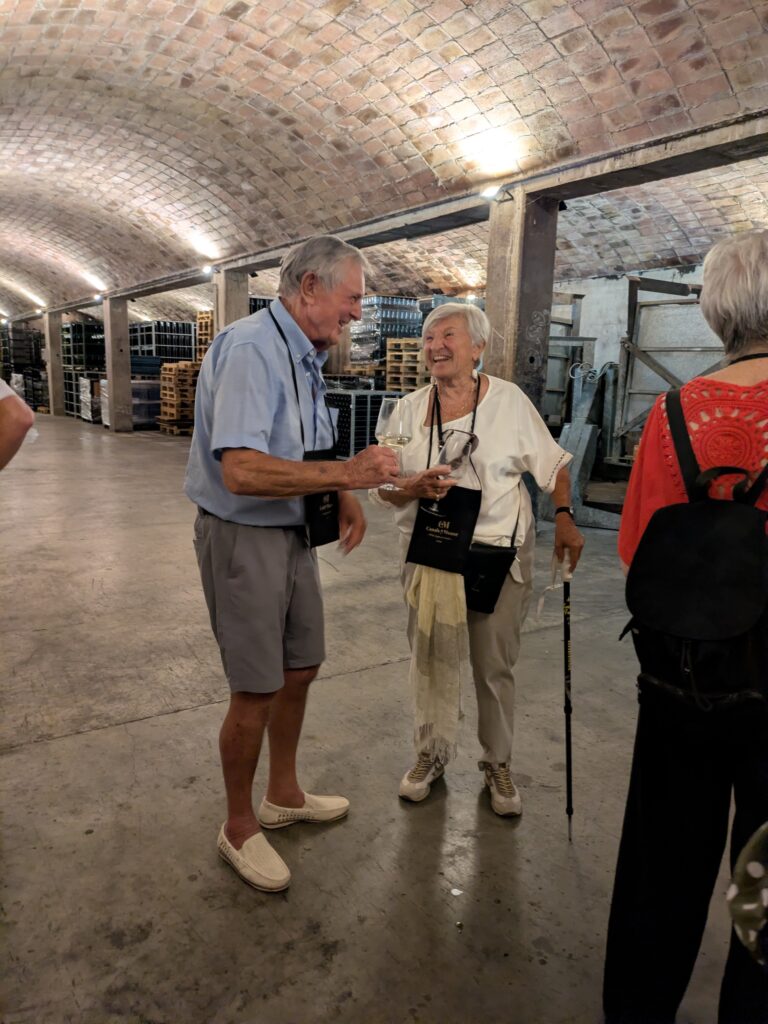
Today we headed first to Sant Sadurni for a visit to the Canals i Munné Winery. We enjoyed a very interesting, guided visit from the Managing Director, Oscar. He is the fourth generation of the family to run the business. We saw some of their vines and then went into the winery where the cava is produced. We stopped three times to sample some cava and wine whilst he pointed out what to look for when tasting his wines. In the depths of the winery, 3 floors below ground level, the cava is stored for a minimum of 2 years.
Following the visit, we went into the town for a tapas lunch, with cava, at the family’s restaurant. We were served with vast platters of meat, preceded by salad and bread and tomato with Alioli. After lunch we went on to visit the Simon Coll Espai Chocolata where we had a very interesting presentation and tasting of the various stages of the creation of chocolate. We also tasted quite a lot of chocolate!
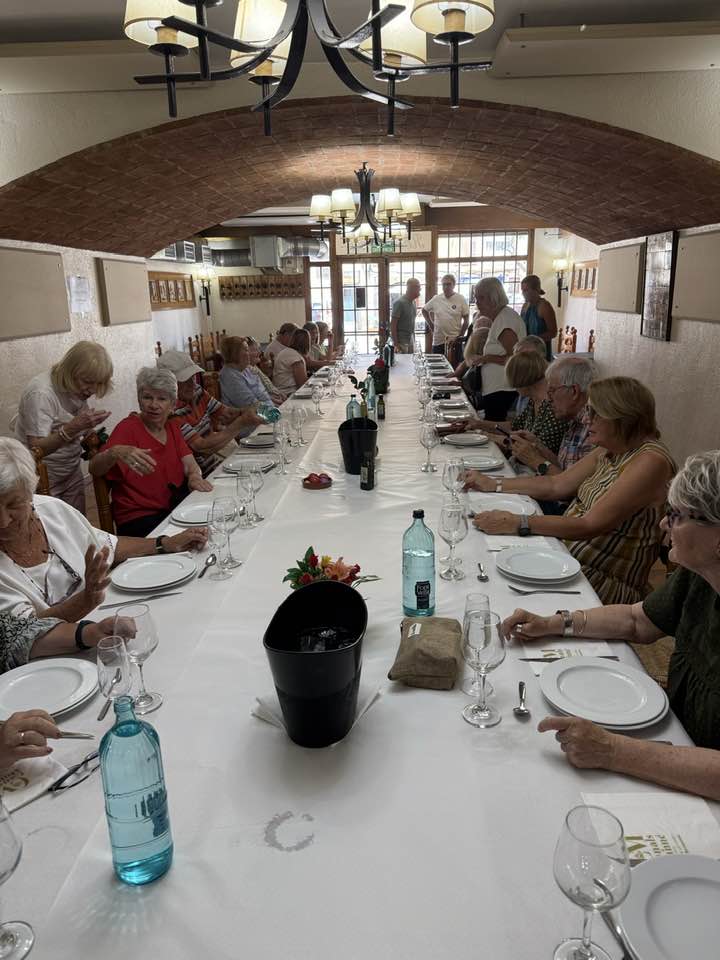
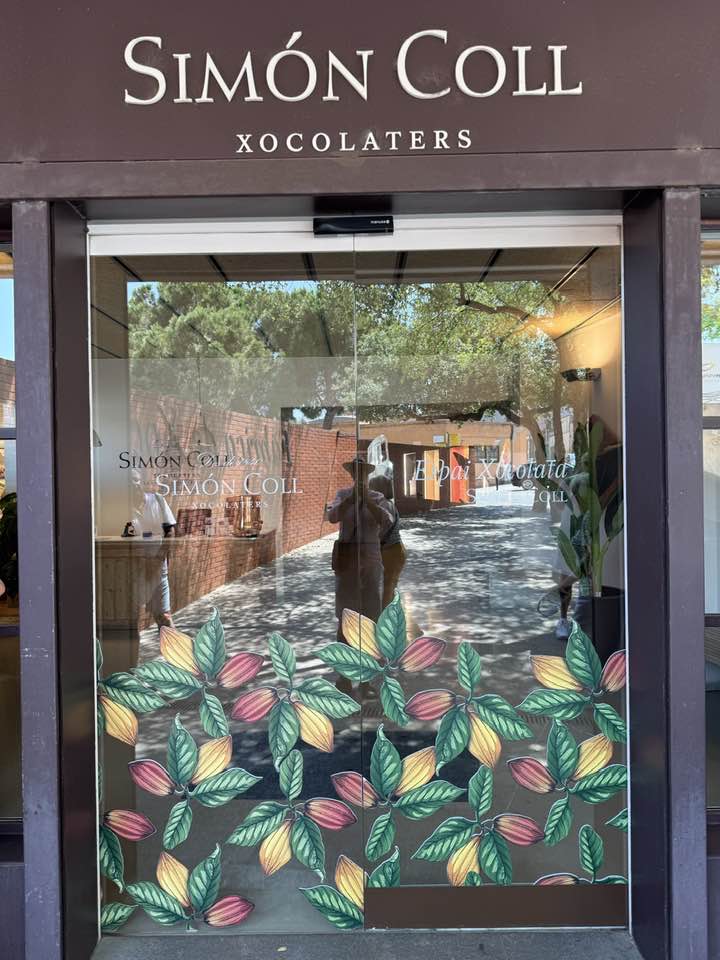
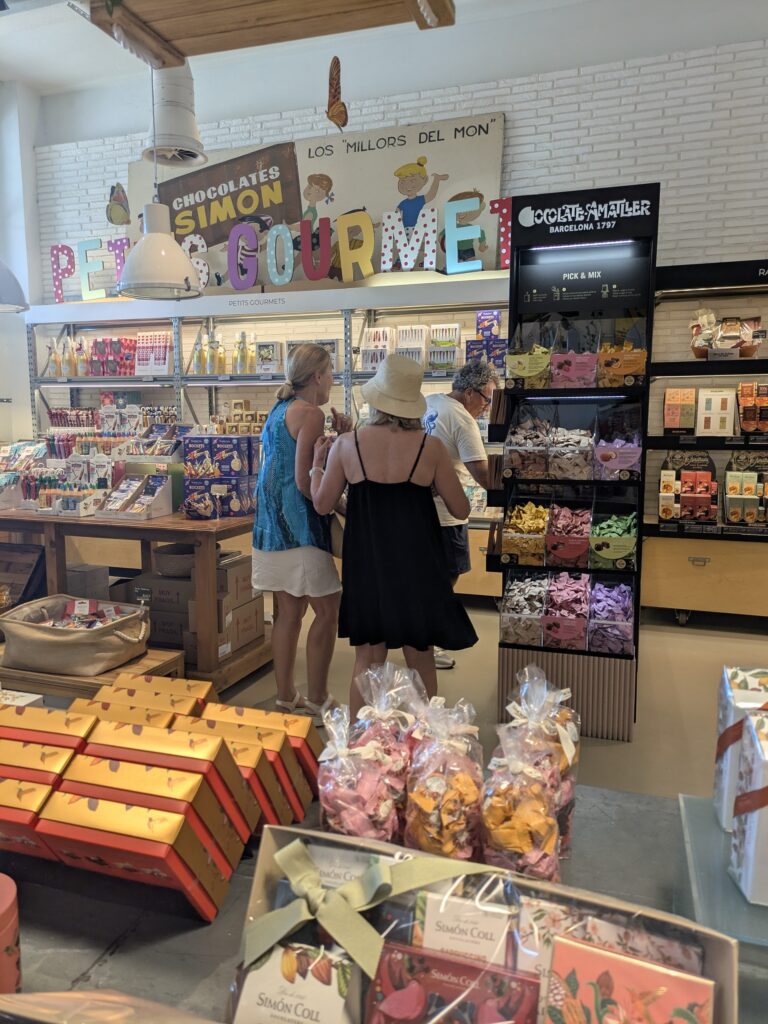
Finally, we travelled on to our hotel, Hotel La Figuerola, in Vandellos. Lovely hotel but we experienced the slowest check-in of the trip!
Saturday 30th May: Miravet
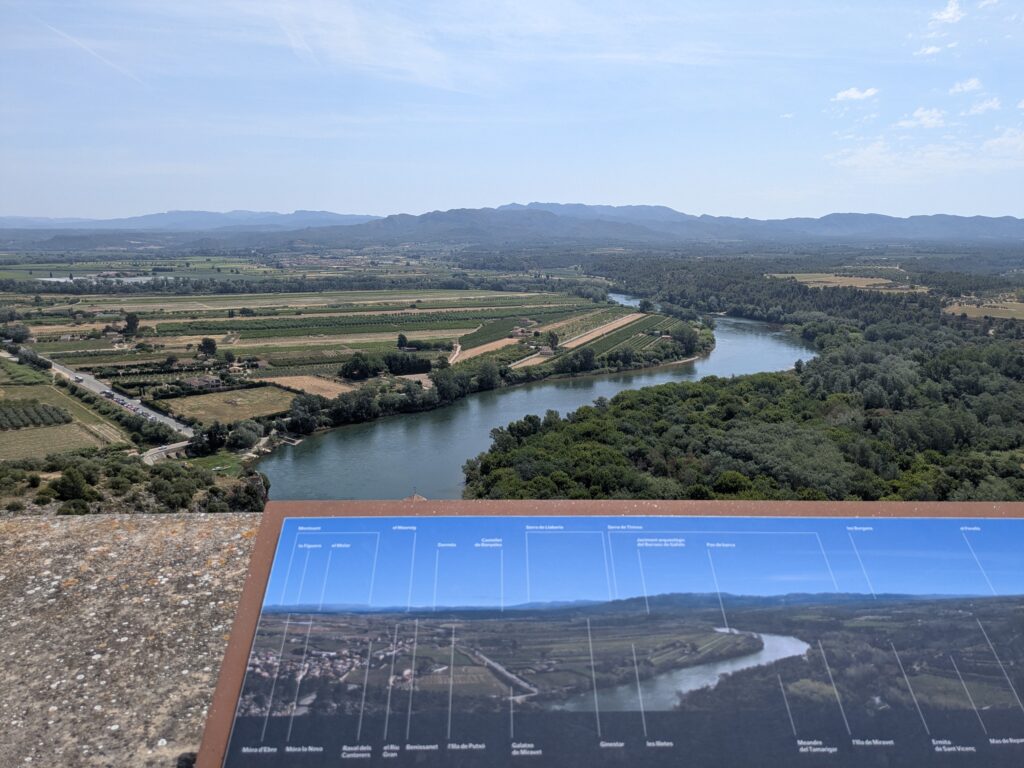
Today we visited Miravet. This is a pretty town on the banks of the River Ebro with a Templar Castle, although it was built on an ancient fortress of the Moors. It was very hot and not everyone fancied the walk up to the church, and it was pretty tough! But the path was very good and it passed by the church, and a lovely terrace with views over the river and the surrounding countryside. Sadly, the church was not open. Those who made it to the castle were rewarded with wonderful views and lots of interesting information about the castle and the Templars. The journey down was easier and back in the town we had cold drinks and some lunch looking out over the river.
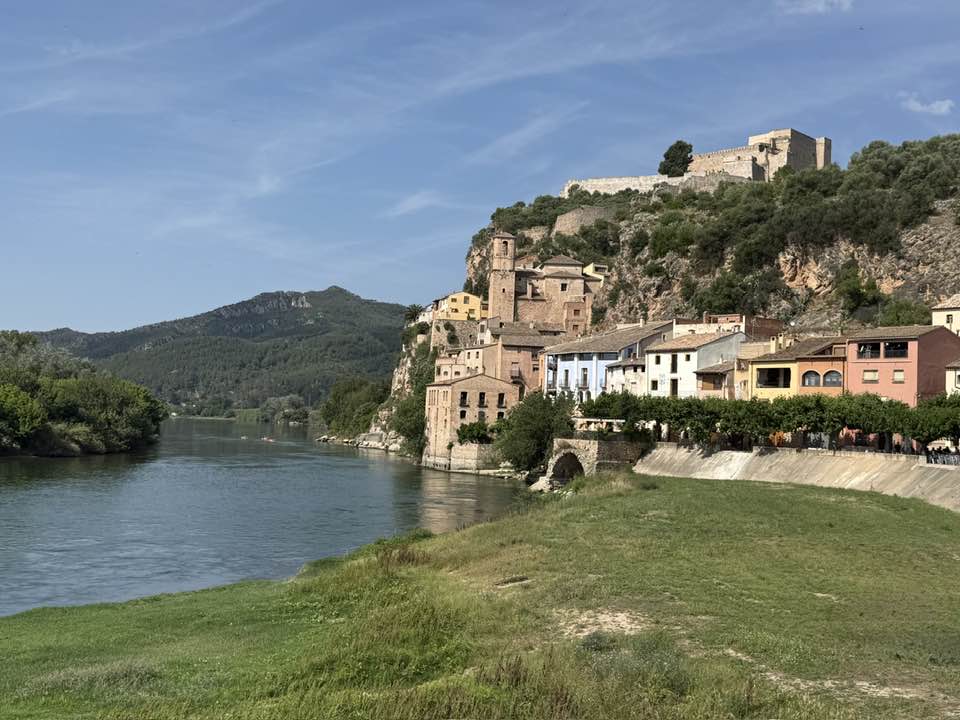
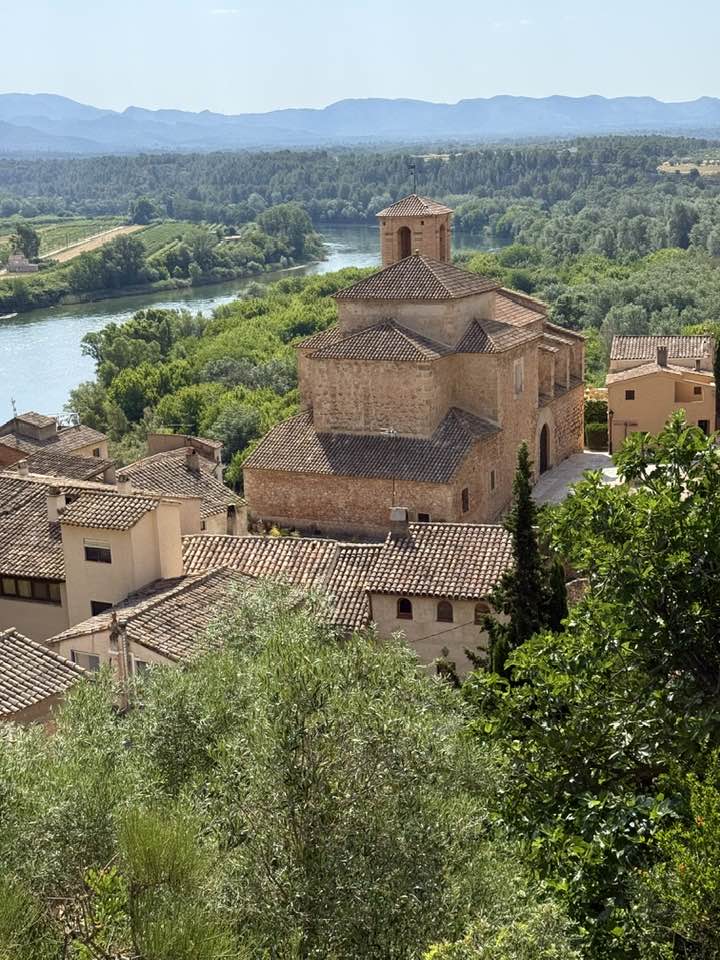
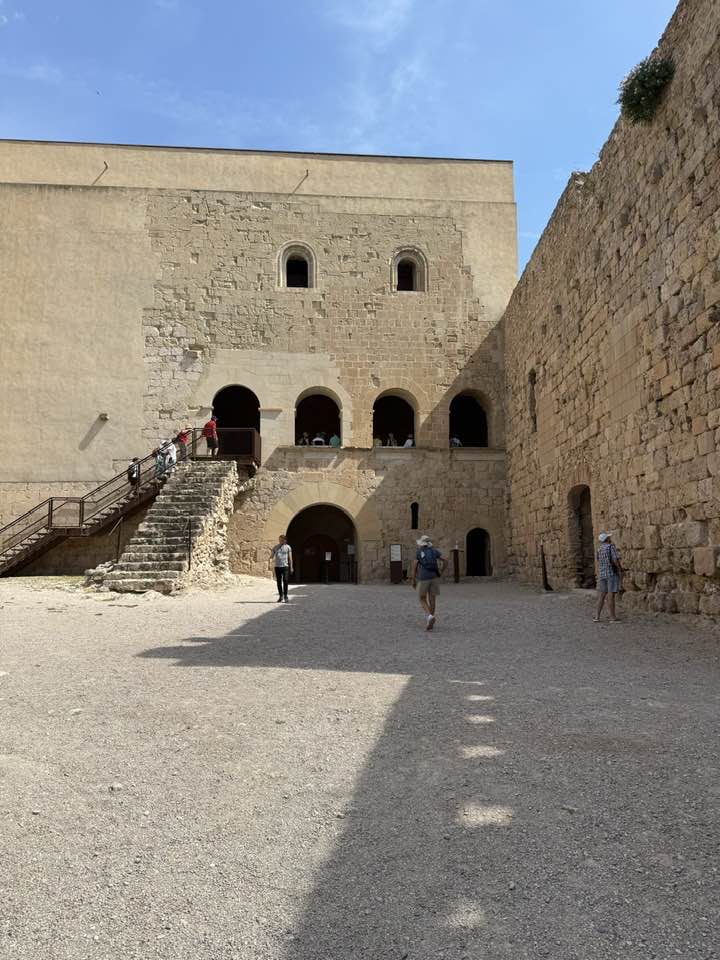
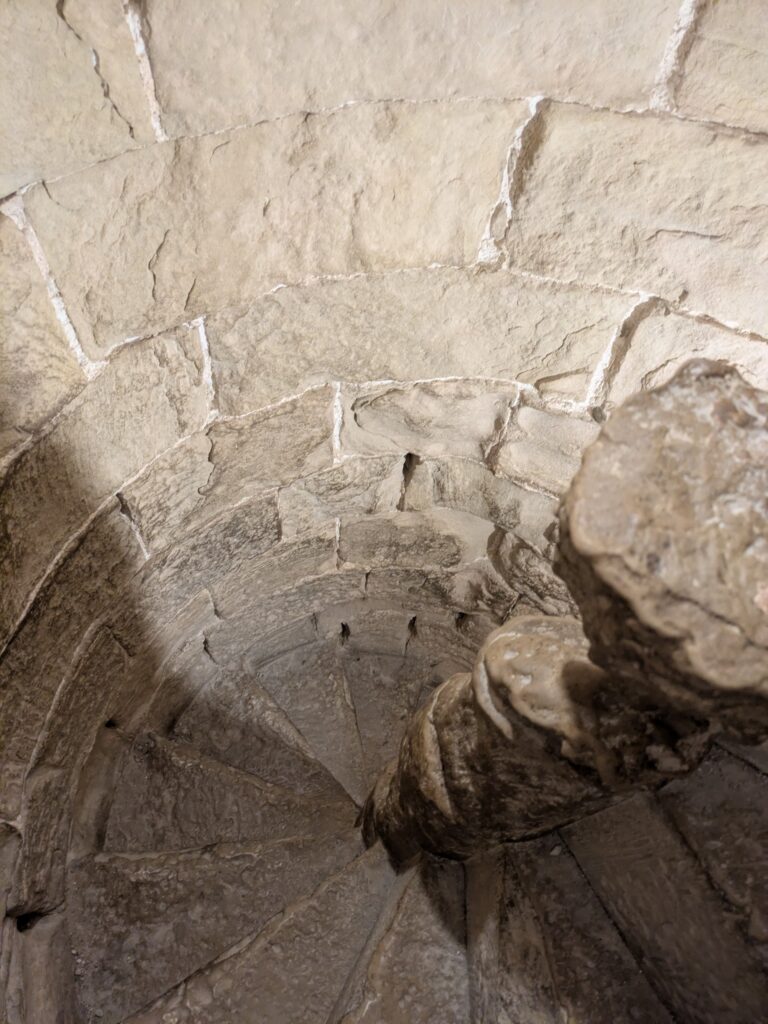
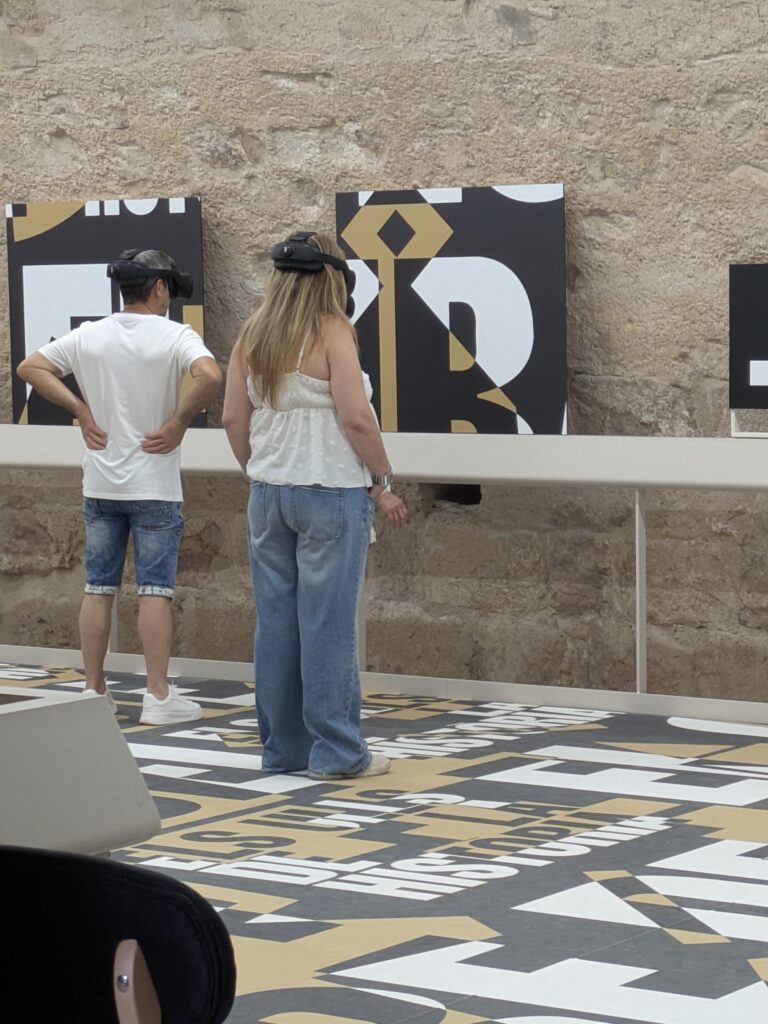
There was an extremely narrow and winding stone staircase to get to the very top of the castle but the views were certainly worth it! Some of us had a fantastic “Virtual Reality Experience” that was brilliantly done, a high-tech historical immersion programme called “The Eyes of History” which uses advanced virtual reality (VR) headsets to recreate the daily lives, legendary splendour, and dramatic fall of the Knights Templar.
Sunday 31st May: Onda, Castellón
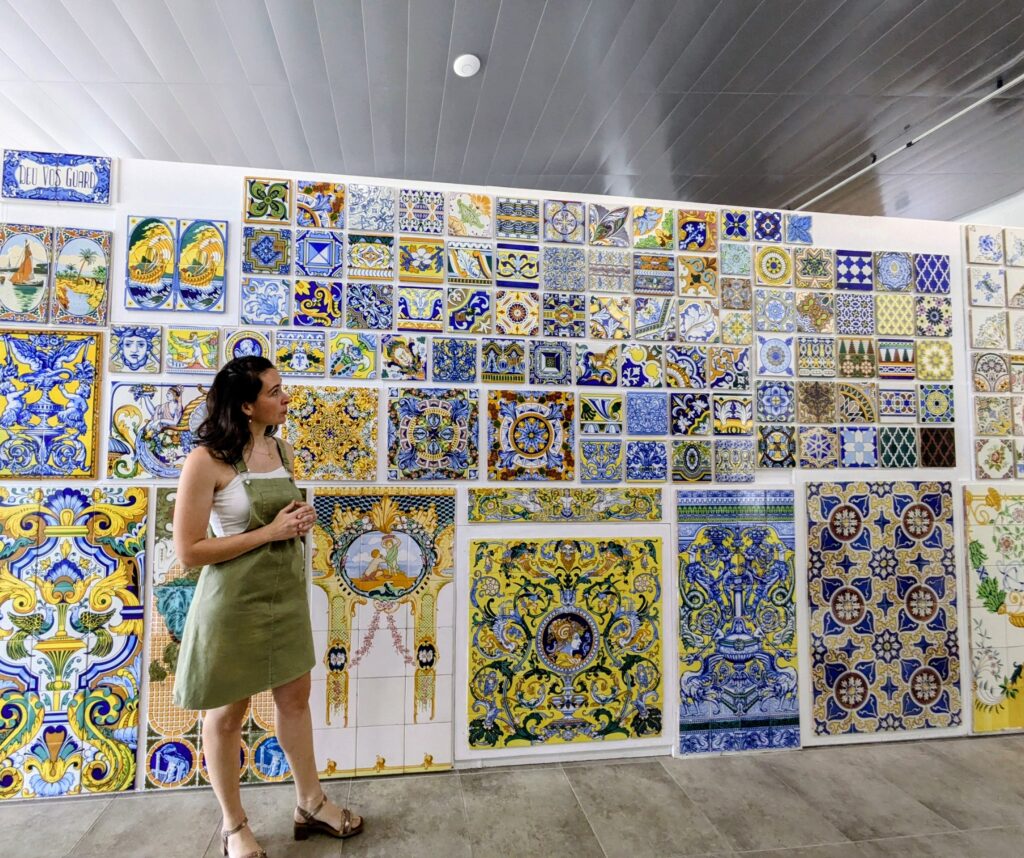
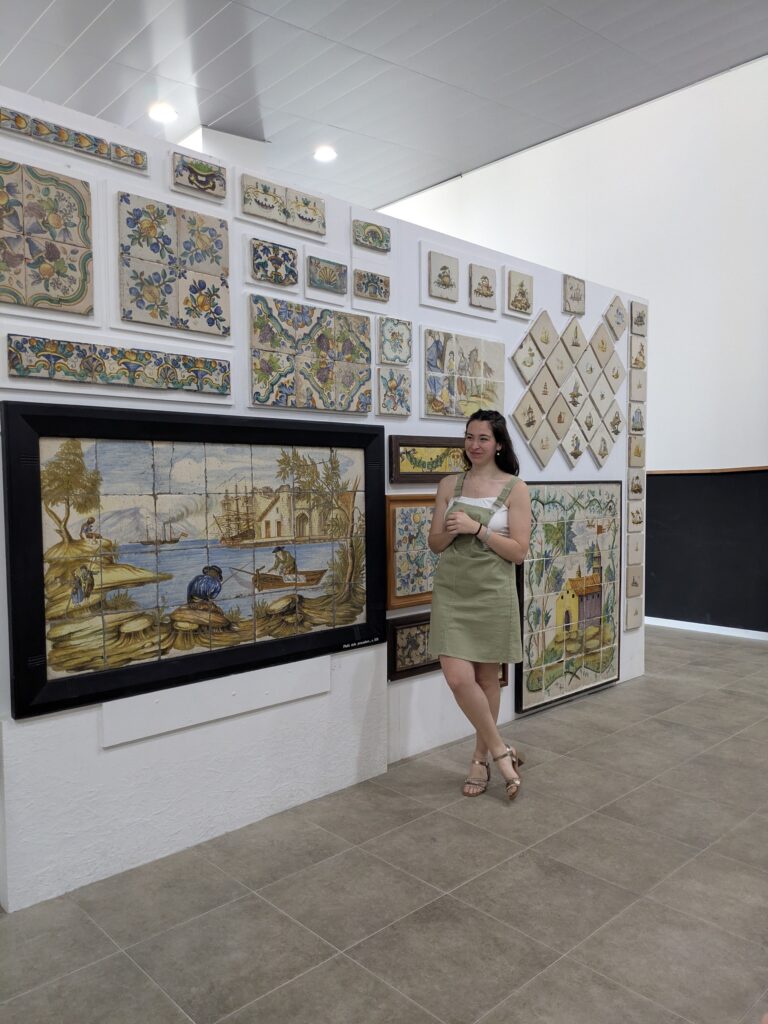
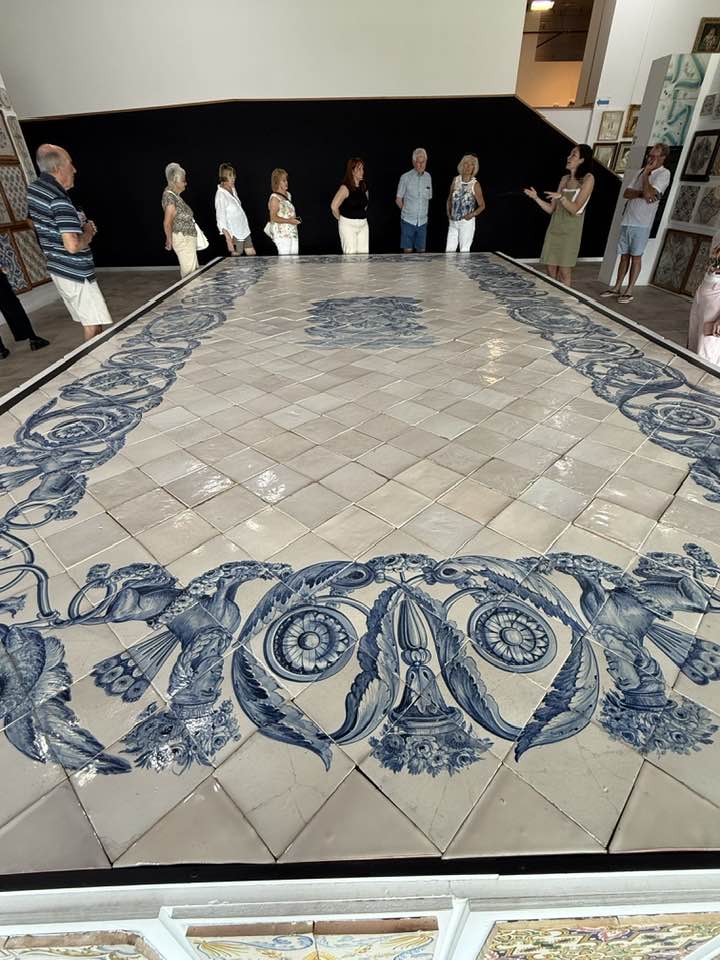
The final day of our memorable trip. We headed for Onda, a centre for tile production in Spain (around 33% of all Spanish tile production). We had a very interesting tour of tile making from Roman times to modern day. Our guide, Noelia, and our interpreter, Celia, were very informative.
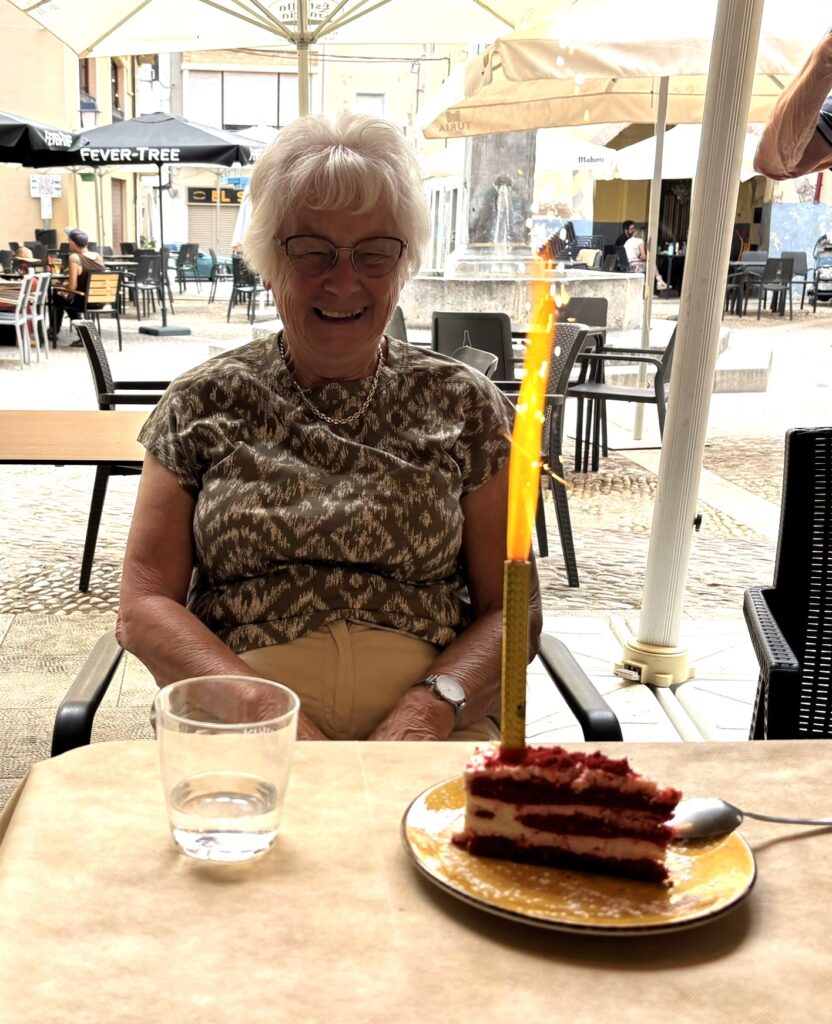
After that we headed to the 4 Cantons Restaurant in the centre of Onda for a lovely lunch, where we also celebrated Diane’s birthday. The restaurant kindly provided a special cake for Diane, to which Angela had added a flare candle, and Angela presented her with a present on behalf of all the members on the tour.
A special thank you to Angela for organising such a wonderful trip, and to Vicente, our driver, who managed to get a 61 seater bus through some very tight corners! And many thanks to all of our fellow travellers who provided good company throughout the trip. Report by Ian Cummings.
A big thank you to all of the members who took photos/videos during the tour, especially Ian Cummings, Jill Cole, Ross Ord, Ken Page, and Angela, and to everyone for making it such a fun and enjoyable trip!
Angela Chantry, group leader – Spanish Culture & Cuisine